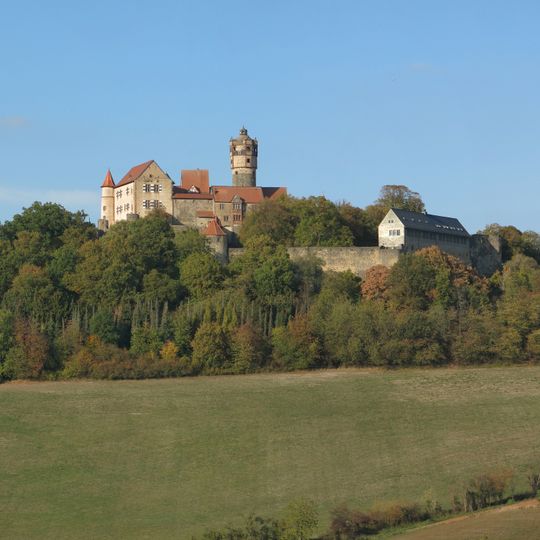
Ronneburg Castle, Castle in Germany
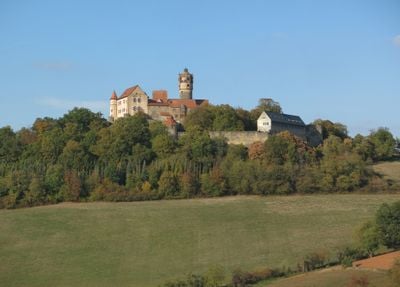
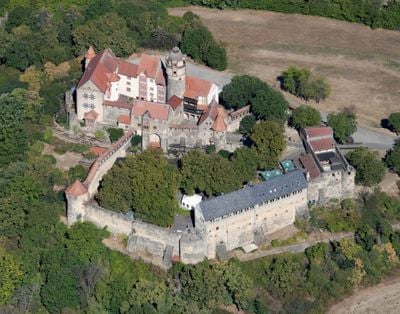
Ronneburg sits on a steep basalt cone and features multiple towers, walls, and a central courtyard arranged as a complete medieval fortress. The entire structure displays the typical layout of a defensive castle with its characteristic defensive elements.
The castle was founded around 1200 and passed between different rulers including the House of Isenburg and the Archbishop of Mainz. These changes of ownership shaped its construction and strategic importance throughout the medieval period.
The castle shapes the character of the town and draws visitors curious about medieval life. The displays of furniture and weapons inside reveal how residents lived and protected themselves during that era.
The site is open from March through November, Tuesday through Sunday, with guided tours explaining the medieval architecture and defense systems. Visitors should wear sturdy shoes since the steep hilltop location makes access demanding.
The castle contains one of the deepest documented wells in Germany, demonstrating medieval engineering for water supply. Additionally, the grounds feature a falconry center where birds of prey perform regular flying demonstrations for visitors.
Location: Ronneburg
Inception: 1200
Accessibility: Wheelchair inaccessible
Phone: +496048950905
Website: https://burg-ronneburg.de
GPS coordinates: 50.23859,9.06119
Latest update: December 6, 2025 16:01
Hesse preserves an extensive collection of historic structures spanning nearly two millennia. The Roman fort of Saalburg near Bad Homburg documents 2nd century frontier fortifications along the Limes. Medieval monasteries such as Arnsburg near Lich and Seligenstadt demonstrate Carolingian and Romanesque construction, while the abbey ruins at Bad Hersfeld reveal the architectural scale of Benedictine establishments. The Abbey of Lorsch holds UNESCO World Heritage status and presents through its gatehouse one of the most important examples of early medieval architecture north of the Alps. The region connects these religious and military structures with castles and palaces from various periods. Münzenberg Castle and the ruins at Ulrichstein document Hohenstaufen fortification techniques, while Braunfels Palace and Friedrichstein Palace in Bad Wildungen illustrate the evolution from defensive stronghold to residence. The Grimm Brothers House in Steinau an der Straße links literary heritage with regional history. Geological formations such as the Rock Sea in the Odenwald and the Crystal Cave at Kubach complement the human built monuments with natural history features.
Burgruine Hardeck
4 km
St. Remigius
6.6 km
Büdingen (Oberhess) station
6.3 km
Natural monuments in Büdingen/440.004 Wilder Stein
6.8 km
Bergkirche
4.6 km
Kirche auf dem Herrnhaag
3.6 km
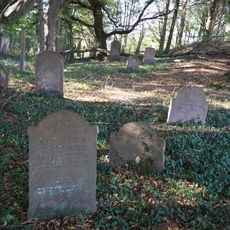
Jewish cemetery Altwiedermus
682 m
Church of Düdelsheim
6.6 km
Jüdischer Friedhof Marköbel
5.8 km
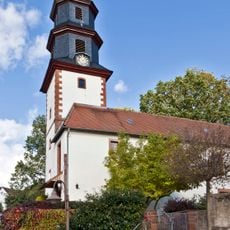
Evangelische Kirche
2.7 km
Protestant Church
4.5 km
Düdelsheim Observation Tower
6.9 km
Naturschutzgebiet Tagkaute von Lieblos
5.2 km
Wasserturm
5.9 km
Unterpforte 21
3.1 km
Waldkapelle
6 km
Altwiedermußer Straße 17
1.8 km
Berliner Straße 31
6.3 km
Burggasse 4
3.1 km
Brunostraße 1
6.9 km
Burggasse 2
3.1 km
Pfarrhaus
6.8 km
Haus Zum Seemenbach 1
6.5 km
Haus Unterpforte 29
3 km
Haus Orleshäuser Hauptstraße 66
5.3 km
Burggasse 6
3.1 km
Großendorf 9
6.6 km
Herrenhaager Straße 5
2 kmReviews
Visited this place? Tap the stars to rate it and share your experience / photos with the community! Try now! You can cancel it anytime.
Discover hidden gems everywhere you go!
From secret cafés to breathtaking viewpoints, skip the crowded tourist spots and find places that match your style. Our app makes it easy with voice search, smart filtering, route optimization, and insider tips from travelers worldwide. Download now for the complete mobile experience.
A unique approach to discovering new places❞
— Le Figaro
All the places worth exploring❞
— France Info
A tailor-made excursion in just a few clicks❞
— 20 Minutes