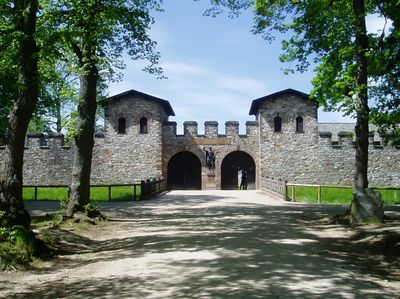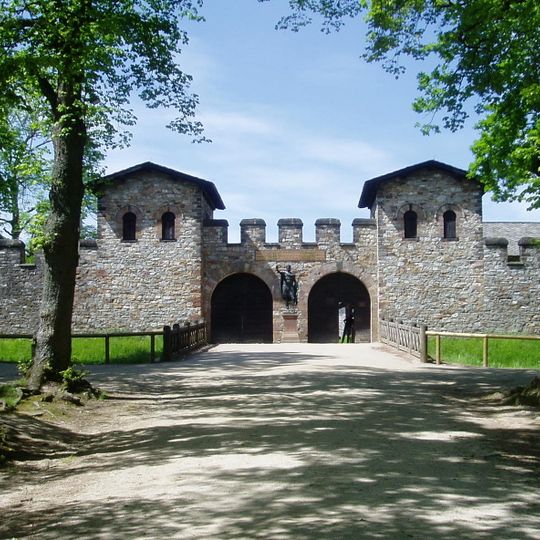
Saalburg Roman Fort, Roman fort in Bad Homburg vor der Höhe, Germany
The Saalburg is a Roman fort on the Taunus ridge with stone walls, administrative buildings, barracks, and storage facilities that once housed about 500 soldiers. The fort displays the typical layout of a Roman military installation with organized streets and clearly defined functional areas.
The fort was built around 90 AD initially as a wood-earth structure and rebuilt in stone around 135 AD to secure the Upper Germanic-Rhaetian Limes border. It served as part of Rome's defense system against Germanic tribes.
The museum in the reconstructed grain store displays Roman weapons, everyday objects, and finds from Germanic provinces. The exhibits give you a sense of how soldiers lived and worked at this location.
The site sits on a hilltop and is accessible on foot, though some paths are steep. It is recommended to wear appropriate footwear and plan for uneven terrain.
Emperor Wilhelm II ordered the complete reconstruction of this military installation in 1897, making it the first Roman fort fully rebuilt in Germany. This ambitious project was one of the earliest large-scale archaeological reconstructions of its kind.
Location: Bad Homburg vor der Höhe
Inception: 90
Elevation above the sea: 418 m
Part of: Lower German Limes
Website: http://saalburgmuseum.de
GPS coordinates: 50.27150,8.56666
Latest update: December 6, 2025 16:00
Hesse preserves an extensive collection of historic structures spanning nearly two millennia. The Roman fort of Saalburg near Bad Homburg documents 2nd century frontier fortifications along the Limes. Medieval monasteries such as Arnsburg near Lich and Seligenstadt demonstrate Carolingian and Romanesque construction, while the abbey ruins at Bad Hersfeld reveal the architectural scale of Benedictine establishments. The Abbey of Lorsch holds UNESCO World Heritage status and presents through its gatehouse one of the most important examples of early medieval architecture north of the Alps. The region connects these religious and military structures with castles and palaces from various periods. Münzenberg Castle and the ruins at Ulrichstein document Hohenstaufen fortification techniques, while Braunfels Palace and Friedrichstein Palace in Bad Wildungen illustrate the evolution from defensive stronghold to residence. The Grimm Brothers House in Steinau an der Straße links literary heritage with regional history. Geological formations such as the Rock Sea in the Odenwald and the Crystal Cave at Kubach complement the human built monuments with natural history features.
Hessenpark
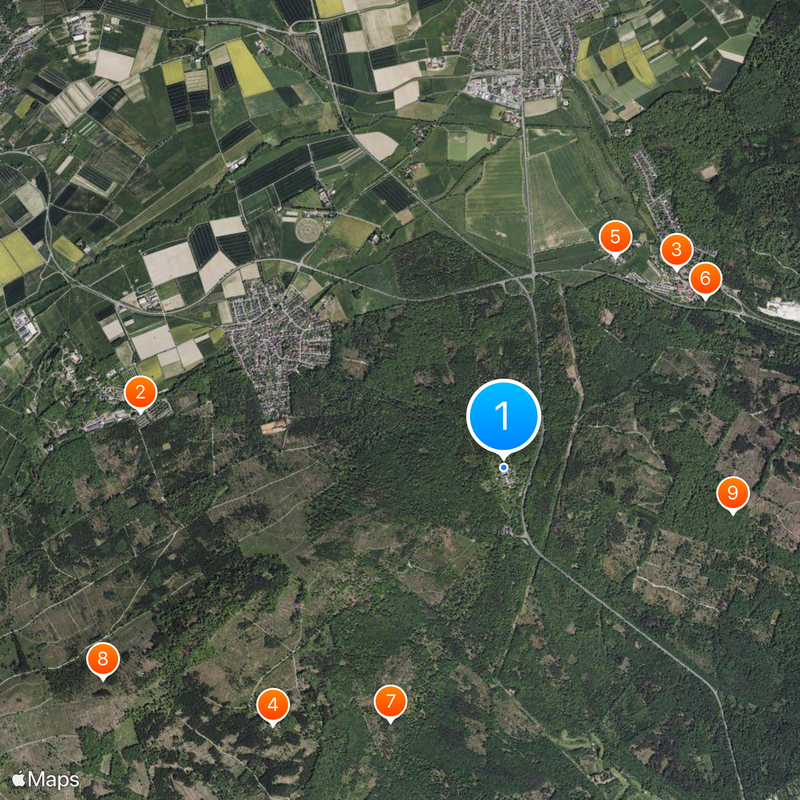
2.6 km
Freizeitpark Lochmühle
1.8 km
Herzberg
2.4 km
Kloster Thron
1.7 km
Kleinkastell Lochmühle
1.8 km
Marmorstein
1.9 km
Roßkopf (Taunus)
3.1 km
Ringwall Gickelsburg
1.6 km
Gickelsburg
1.6 km
Wehrheim station
2.8 km
Bahnhof Saalburg
1.9 km
Drusenküppel
1.6 km
Hessenpark - Synagoge aus Groß-Umstadt
3 km
Kapelle aus Lollar
2.9 km
Kirche aus Niederhörlen (Hessenpark)
2.8 km
Hessenpark
2.6 km
Herzberg Tower
2.4 km
Ringwall Roßkopf
3 km
Schanze Lochmühle
1.2 km
Stallscheune aus Asterode
3 km
Hammerwerk aus Battenberg
2.9 km
Haus Heck aus Friedensdorf
2.8 km
Martinsklause aus Remsfeld
3.1 km
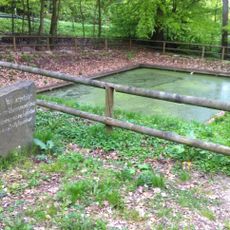
Saalburg Mithraeum
373 m
Kleinkastell Saalburg 2
178 m
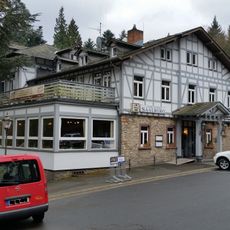
Landgasthof Saalburg
417 m
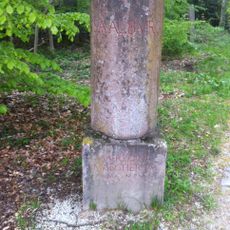
Saalburg/Margheriten-Stein
425 m
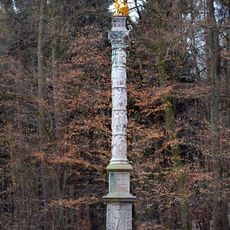
Saalburg / Jupitersäule
596 mReviews
Visited this place? Tap the stars to rate it and share your experience / photos with the community! Try now! You can cancel it anytime.
Discover hidden gems everywhere you go!
From secret cafés to breathtaking viewpoints, skip the crowded tourist spots and find places that match your style. Our app makes it easy with voice search, smart filtering, route optimization, and insider tips from travelers worldwide. Download now for the complete mobile experience.
A unique approach to discovering new places❞
— Le Figaro
All the places worth exploring❞
— France Info
A tailor-made excursion in just a few clicks❞
— 20 Minutes