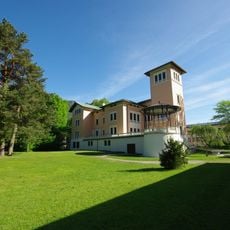
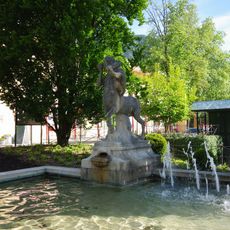
Kloster Sankt Zeno Reichenhall, Former Augustinian canons' monastery in Bad Reichenhall, Germany
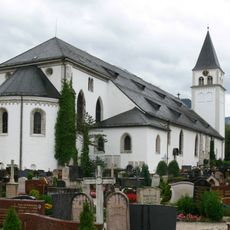
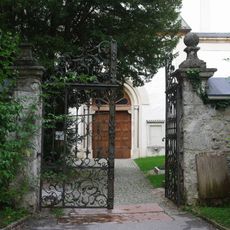
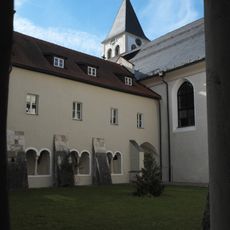
Kloster Sankt Zeno Reichenhall is a former monastery of the Augustinian Canons in Bad Reichenhall. Its church, St. Zeno, is the largest Romanesque church building in Upper Bavaria, consecrated in 1228. The cloister, built at the end of the 12th century, has a Gothic ribbed vault with individually carved keystones. The complex includes a chapter house with a Romanesque vault and uses local Untersberg marble for reliefs and floors.
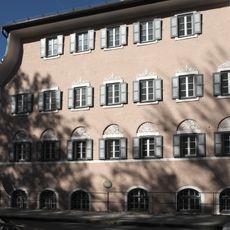
A cell founded around 803 by Archbishop Arno of Salzburg, by legend by Charlemagne, was followed by a Benedictine house in the 8th–9th centuries and a collegiate foundation in the 11th. On 5 April 1136 Archbishop Conrad I of Abensberg re-established it for Augustinian canons, whose rule was likely adopted around 1123. Dissolved in 1803, the buildings passed to the English Ladies in 1852.
The monastery's name comes from Saint Zeno, chosen as patron because the Reichenhall basin was prone to flooding and Zeno was invoked against floods. From 1720 to 1803 the canons brewed beer for their own use and for the parishes they served; unauthorised sales to Reichenhall innkeepers caused conflicts with local brewers.
The church and cloister are accessible to visitors, with guided tours available to explore the architectural features at a comfortable pace. It is wise to check opening hours beforehand and wear sturdy shoes, as the complex includes stairs and uneven pathways.
Until the 16th century, the monastery owned salt pans at the Reichenhall saltworks, which generated its primary income. This salt monopoly enabled the community to maintain and expand its facilities over many centuries.
The community of curious travelers
AroundUs brings together thousands of curated places, local tips, and hidden gems, enriched daily by 94,046 contributors worldwide.