Rosenaustadion, Multi-purpose stadium in Augsburg, Germany.
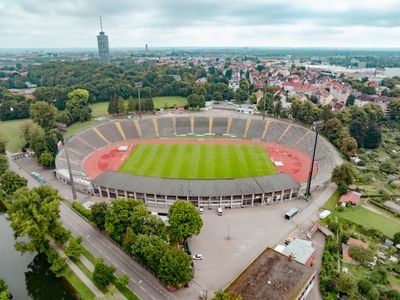
Rosenaustadion is a multi-purpose stadium in Augsburg with an oval running track around a grass pitch. Its terraces are divided by yellow stripes, and a low-roofed grandstand with a light facade runs along one side. The stadium holds 28,000 spectators and is a heritage-listed monument.
Plans for the stadium date to 1926, but construction began in 1949 on a site beside the Wertach, using rubble from the wartime bombing of Augsburg; a temporary narrow-gauge railway brought 185,000 tonnes of debris from the city centre. The ground opened on 16 September 1951 with a B-international against Austria before 51,000 spectators, and the main grandstand followed the same year. It was the first large new sports arena built in Germany after the war and was placed under heritage protection in 2014.
The venue hosted five matches during the 1972 Summer Olympics, contributing to German sports development in both football and athletics competitions.
The stadium lies beside the Wertach river in the Rosenau area, its back straight built against a rubble mound from the war. The main grandstand dates from 1951, while the opposite terrace is an open concrete bank with yellow-painted section stripes. The site is a heritage monument, so expect the original post-war layout rather than modern arena fittings.
In 1952, the stadium recorded its highest attendance of 65,000 spectators during an international match between Germany and Switzerland.
The community of curious travelers
AroundUs brings together thousands of curated places, local tips, and hidden gems, enriched daily by 94,178 contributors worldwide.