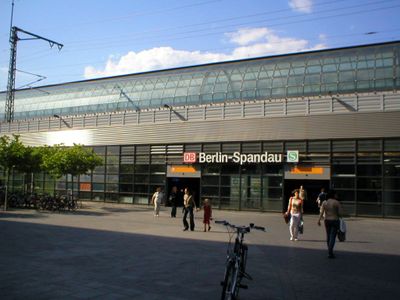
Berlin-Spandau station, railway station situated in the Spandau district of Berlin, Germany
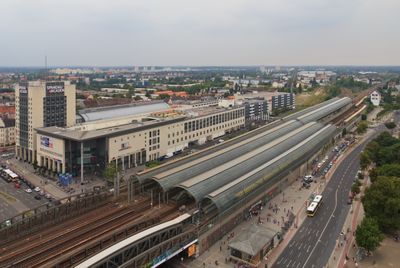
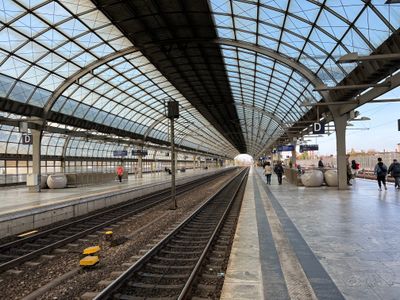
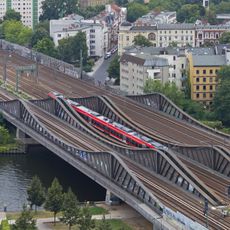
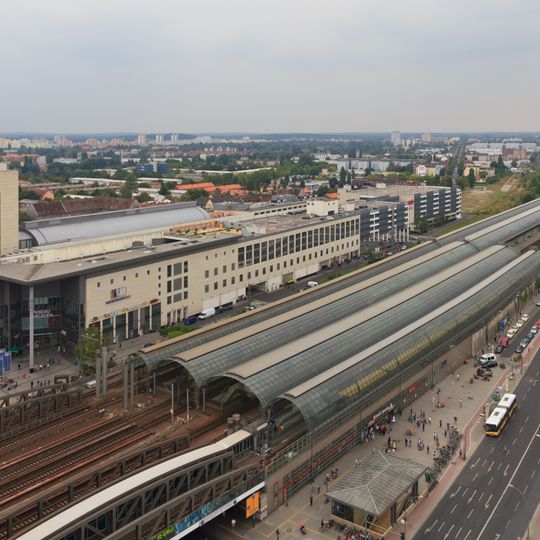
Berlin-Spandau station is an elevated railway junction in Spandau that connects multiple train lines serving the district. It features four long-distance platforms, two S-Bahn platforms, and additional freight tracks, all covered by a contemporary glass roof built during a 1996 to 1998 renovation.
The first station opened in 1871 and underwent renovation in 1910 as Spandau Vorortbahnhof. Following the Berlin Wall construction in 1961, train services were severely cut until they gradually resumed after the wall's fall in 1990.
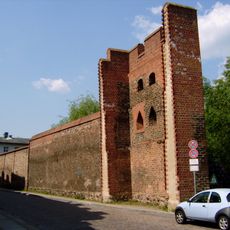
The name Spandau comes from Slavic roots and continues to define the district's identity. The station serves as an everyday meeting point where locals gather, chat, and grab coffee before catching their trains.
The station features clear signage and wheelchair access, making it easy to navigate. Ticket machines, electronic departure boards, and connections to local buses and the U7 U-Bahn line at nearby Rathaus Spandau station help you plan your journey effectively.
The station was designed by the renowned architectural firm Gerkan, Marg and Partners and is known for its distinctive glass roof design. This architectural solution brings daylight to the platforms and creates an open quality that sets it apart from older station buildings.
The community of curious travelers
AroundUs brings together thousands of curated places, local tips, and hidden gems, enriched daily by 90,844 contributors worldwide.