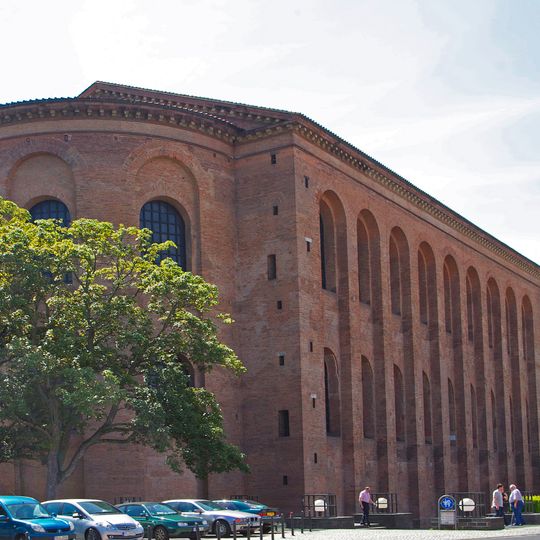
Aula Palatina, Church building in Trier, Germany
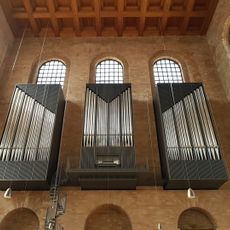
The Aula Palatina is a red-brick hall 67 m long, 26.05 m wide and 33 m high, with a semicircular apse at its north end and a row of tall round-headed arched windows between brick pilasters. Roman masonry survives in the apse, the west wall and parts of the south wall, 2.7 to 3.4 m thick on a concrete foundation 4 m wide. The interior is unplastered brick under a coffered spruce ceiling hung from a prestressed-concrete roof.
This building was constructed in the early 300s as part of an emperor's palace complex under Constantine the Great. It was later converted into a church and has served religious purposes ever since.
The name Basilica of Constantine comes from the 19th-century local historian Johannes Steiner, who took it from a late antique panegyric on the emperor; the term is misleading, since the hall was never a Catholic church and is not a basilica in the architectural sense. Since 28 September 1856 the building has belonged to the Protestant congregation, which uses it as the Church of the Redeemer.
The basilica is signposted within the city, and several bus lines stop directly at Konstantinplatz. The Basilika underground car park lies south of the Electoral Palace. Excavations of Roman predecessor buildings beneath the floor, carried out by the Rheinisches Landesmuseum from 1950 to 1954, can be visited on a special guided tour.
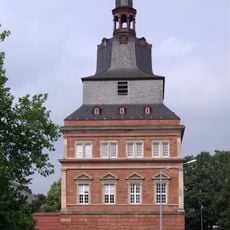
The six bells of the Aula Palatina have no tower of their own: since 1968 they have hung in the Red Tower, the former archive building of the archbishopric, on what is now Willy-Brandt-Platz. The hall itself is the largest surviving room from classical antiquity, 67 m long and 33 m high.
The community of curious travelers
AroundUs brings together thousands of curated places, local tips, and hidden gems, enriched daily by 92,883 contributors worldwide.