Sankt Maria de Victoria, Baroque church in Ingolstadt, Germany.
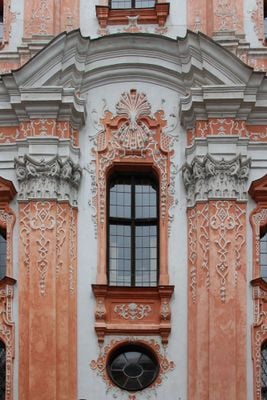
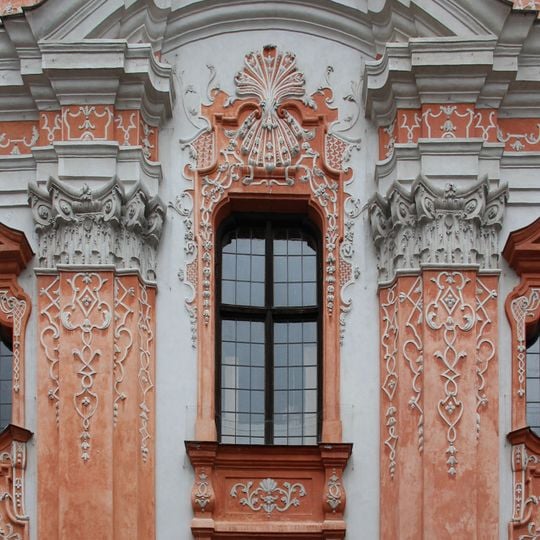
Sankt Maria de Victoria is a baroque church in Ingolstadt built by Egid Quirin Asam from 1732, with facades stuccoed in 1733 and the interior in 1734. Its flat ceiling holds a 490-square-metre fresco by Cosmas Damian Asam, the largest flat-ceiling fresco in the world, showing Mary as Queen of Heaven with the four continents in the corners. The exterior is baroque, the furnishings mainly rococo.
Construction began in 1732 under architect Egid Quirin Asam, a leading master of Bavarian baroque design. The project coincided with a period of intensive artistic renewal in southern Germany.
The church's full name, St. Maria de Victoria, refers to the Christian fleet's victory over the Ottoman navy at Lepanto on 7 October 1571. In the sacristy, the 18 kg Lepanto monstrance, made in 1708 by Augsburg goldsmith Johannes Zeckl, depicts the battle in detail, with the Christian commanders shown in the mast baskets. The Tilly cross, said to have been carried on campaign by field marshal Johann t'Serclaes von Tilly, is kept beside it.
The church is centrally located and easily reached by public transit, with bus stops nearby. Morning visits allow better lighting to view the interior decoration and artwork.
The 490-square-metre ceiling fresco by Cosmas Damian Asam is the world's largest flat ceiling fresco. It shows Mary as Queen of Heaven, and the four continents Europe, Asia, Africa and America appear in the corners. In the sacristy, the 18 kg Lepanto monstrance of 1708 by Augsburg goldsmith Johannes Zeckl depicts the naval battle of Lepanto of 7 October 1571.
The community of curious travelers
AroundUs brings together thousands of curated places, local tips, and hidden gems, enriched daily by 94,342 contributors worldwide.