Bagger 1452, Industrial heritage museum in Görlitz, Germany
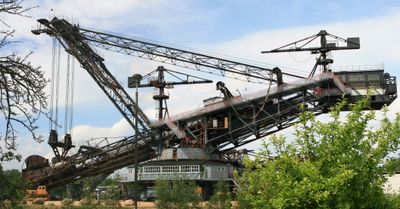
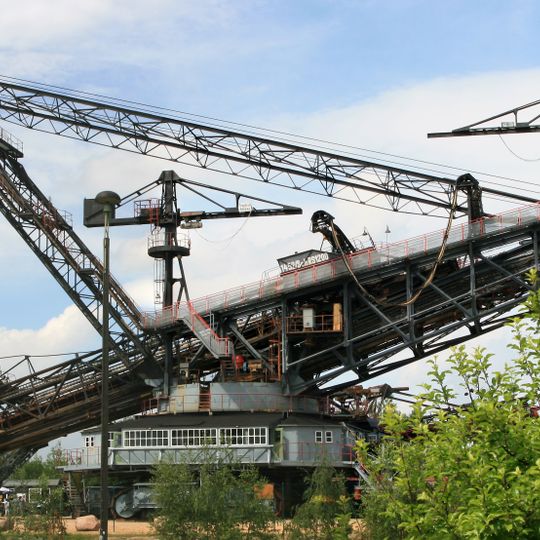
Bagger 1452 is a bucket-wheel excavator of type SRs 1200, built in 1961, measuring 33.5 m high, 75 m long and 47.85 m wide including the loading boom. Its six-part crawler undercarriage is 23 m wide and 25 m long, and the bucket wheel has a diameter of 8.6 m with eight buckets of 1.2 m³ each. It stands at the former Berzdorf open-pit mine near Görlitz.
Built in 1961 by VEB Schwermaschinenbau Lauchhammerwerk, the excavator first worked in the Phönix open-pit mine south of Leipzig until its closure in 1968. It was dismantled in 1970 and moved to the Berzdorf open-pit mine near Görlitz, where it extracted lignite until mining stopped in 1997. It then served in recultivation until 2002, when it was retired and kept as a museum piece by a local association.
The excavator represents engineering achievement from East Germany and recalls the era when brown coal shaped the region's economy. Visitors see here a symbol of the labor and endurance tied to mining in Saxony.
The site is located at the edge of Görlitz and is easily reached on foot or by car, with parking available on site. Visitors should bring weather-appropriate clothing, as the installation is outdoors and weather conditions can affect the experience.
The bucket wheels were specifically designed for brown coal extraction and could handle large quantities of material daily. This technical system was a turning point for the mining industry and made large-scale extraction economically viable.
The community of curious travelers
AroundUs brings together thousands of curated places, local tips, and hidden gems, enriched daily by 94,469 contributors worldwide.