Benediktinerkloster Schweinfurt, Benedictine monastery and church in Peterstirn, Schweinfurt, Germany
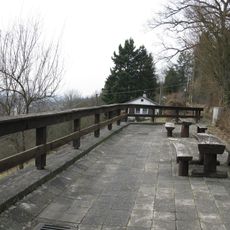
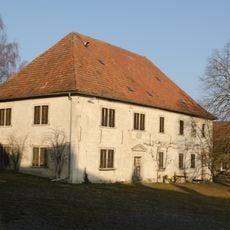
Benediktinerkloster Schweinfurt is a religious complex situated on the Peterstirn hill on the eastern edge of Schweinfurt overlooking the Main River. The site contains multiple historic buildings, including structures from the 1800s and a historic bell tower.
Eilica, widow of Berthold von Schweinfurt, founded a nunnery here around 1004 after Henry of Schweinfurt's defeat in the Schweinfurter Fehde. Around 1055 it became the Benedictine monastery Stella Petri, source of the name Peterstirn. In 1283 the Teutonic Order took over and fortified it; Schweinfurt bought and blew up the monastery castle in 1437.
The monastery's name Stella Petri, "Star of Peter", gave the hill its name Peterstirn. Bishop Otto of Eichstätt consecrated an All Saints' chapel and altars to Silvester and Felicitas here between 1183 and 1195. The site is now a Bodendenkmal, a protected archaeological zone listed as "Burgstall und Klosterwüstung" (castle site and deserted monastery).
The monastery site lies on the Peterstirn, about 25 metres above the Main at 230 m above sea level, in Schweinfurt's northeastern district. The historic Mainleitenstraße (today Staatsstraße 2447) and the 1852 Bamberg–Schweinfurt railway run at the foot of the hill. The area is now occupied by the Weingut Dahms; remains of the Teutonic Order fortifications survive on the Sattler property.
Railway construction workers discovered an underground crypt buried beneath the Peterstirn hill while excavating for materials. This find revealed hidden layers of the monastery's early history that might otherwise have remained unknown.
The community of curious travelers
AroundUs brings together thousands of curated places, local tips, and hidden gems, enriched daily by 93,096 contributors worldwide.