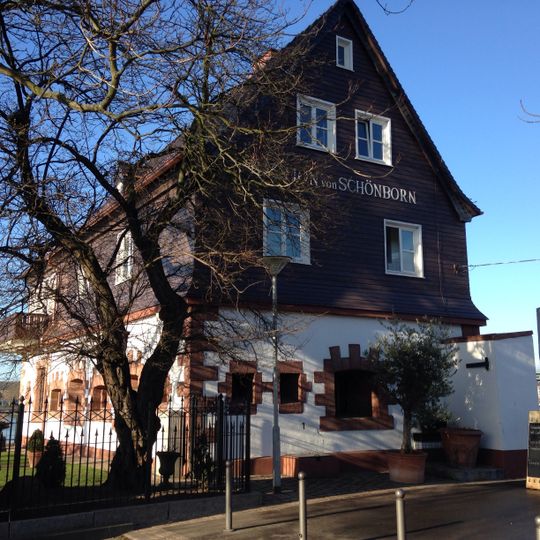
Bastion von Schönborn, Historic fortification in Mainz-Kastel, Germany
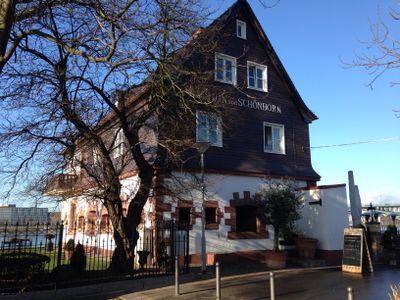
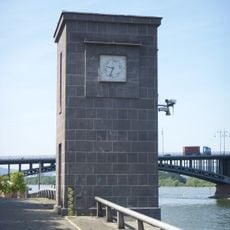
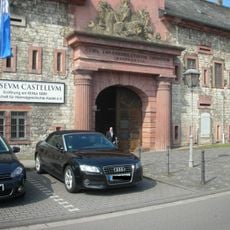
Bastion von Schönborn is a rebuilt blockhouse forming the outwork of the Reduit fortification in Mainz-Kastel, on the right bank of the Rhine. Built between 1830 and 1834 at the same time as the Reduit, it guarded the south-eastern flank of the fortification and the floating bridge. The two-storey building now houses a restaurant with a terrace and, on its first floor, the Flößerzimmer, a museum room dedicated to the rafters' trade.
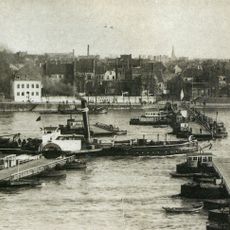
The bastion was built between 1830 and 1834 together with the Reduit of the Mainz federal fortress, as an outwork protecting the south-eastern flank of the fortification and the floating bridge. From 1861 it briefly served as a landing stage for the Königliche Eisenbahndirektion Frankfurt ferry boats. Damaged in the Second World War, it was restored in the 1950s; in 1998 the Gesellschaft für Heimatgeschichte Kastel acquired the Reduit area.
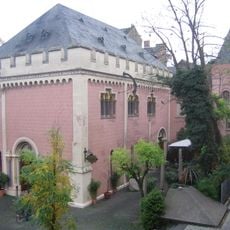
The restaurant uses the historic rooms in distinctive ways, with different areas like the Domstube and Zunftstube serving regional and Mediterranean dishes. Visitors experience how architecture and contemporary hospitality work together within these old walls.
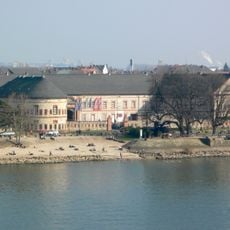
The location sits directly along the Rhine bank and is easy to spot, with a generous outdoor area for warm days. A beach-like area nearby lets you watch the river and passing boats while you sit and dine.
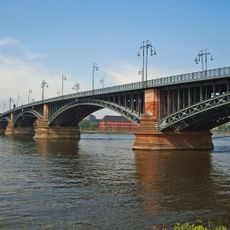
The bastion is named after Johann Philipp von Schönborn (1605–1673), the Mainz archbishop who built the earlier Mainz ship bridge after the Thirty Years' War, not the 18th-century prince-bishop. From 1861 it briefly served as a landing stage for the Royal Railway Directorate Frankfurt's ferry boats.
The community of curious travelers
AroundUs brings together thousands of curated places, local tips, and hidden gems, enriched daily by 93,717 contributors worldwide.