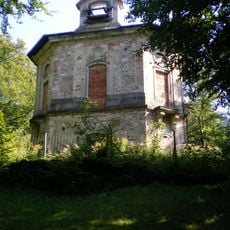
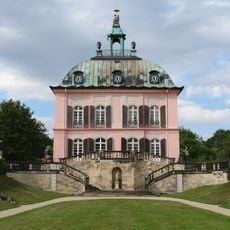
Fasanenschlösschen, Baroque hunting pavilion in Moritzburg, Germany.
Fasanenschlösschen is a two-story Rococo pavilion with a pink facade, five shuttered windows per level and an arched central entrance reached by a two-flight stone staircase. Its roof is a weathered green mansard with three round dormer windows, topped by a green copper cupola bearing a statue. Baroque staircases stand on the south and east sides, and sandstone figures line the approach paths.
Construction began in 1769 under Elector Frederick Augustus III of Saxony and was completed in 1782. The project was directed by architects Johann Daniel Schade and Johann Gottlieb Hauptmann as part of the royal retreat buildings of that century.
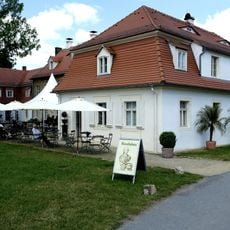
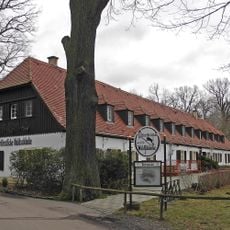
The name comes from the pheasantry established in 1728; pheasants were kept here before August the Strong's time, and breeding is documented continuously until 1916. Since 2006 the pheasantry has been revived in the espalier gardens. The neighbouring former court kitchen building now holds small special exhibitions and a summer café.
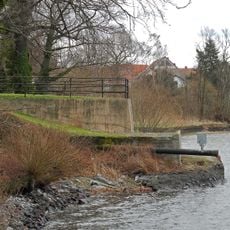
The pavilion sits within the Moritzburg Castle grounds and is best reached by walking from the main castle building. Plan time to explore the surrounding gardens, particularly if you want to trace the pathways that connect toward the ponds.
The pheasantry that gave the pavilion its name is documented continuously until 1916; since 2006, birds have again been kept in the espalier gardens beside it. The building served as an ornithological outpost of Dresden's zoological museum until 1996.
The community of curious travelers
AroundUs brings together thousands of curated places, local tips, and hidden gems, enriched daily by 94,391 contributors worldwide.