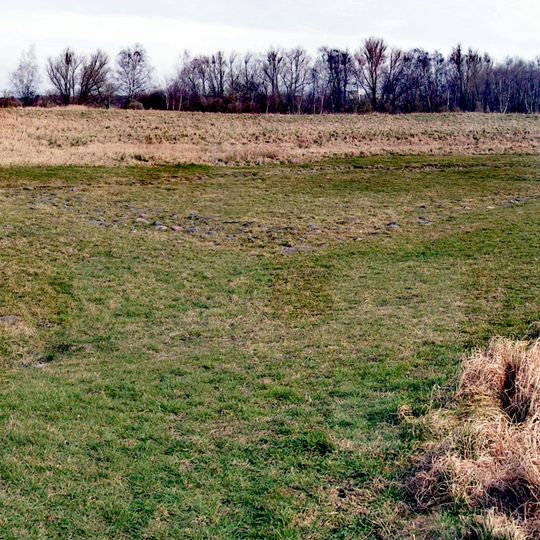
Liubice, Archaeological site and cultural heritage monument at the confluence of Schwartau and Trave rivers, Germany.
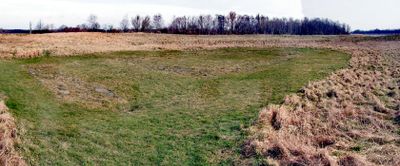
Liubice is an archaeological site at the confluence of the Schwartau and Trave rivers north of Lubeck, revealing remains of a medieval fortress with storage buildings, stalls, residential quarters, and workshops. The layout shows how a trading and administrative settlement was organized across the landscape.
The settlement began as early as 819, confirmed by archaeological findings since the 1970s, making it older than once believed. In the late 1100s it transformed into an island fortress when a ditch separated it from the mainland, reinforcing its role as a trading hub.
The ruins of the region's first stone church stand here, built around 1100 by Prince Henry as both a religious center and burial place for the ruling family. This sacred building shaped how people understood their place in the emerging Christian community.
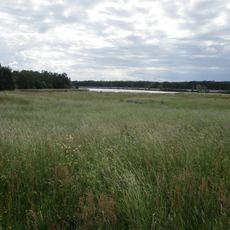
The site lies just four kilometers north of Lubeck's old town and is easily reached by following the rivers. Wear sturdy shoes as the ground is uneven and some ruins are still being uncovered.
The transformation into an island fortress was a deliberate defense strategy, not an accident, reflecting the settlement's growing importance as a trading post. A purposeful ditch separated it from the mainland, making it much harder to attack.
The community of curious travelers
AroundUs brings together thousands of curated places, local tips, and hidden gems, enriched daily by 92,677 contributors worldwide.