Paulinzella Abbey

Log in to your account

AroundUs is a community-driven map of interesting places, built by curious explorers like you. It grows with every review, story, and photo you share.
Connect to save your favorite spots, contribute locations, and create personalized routes.
By continuing, you accept our Terms and Conditions and our Privacy Policy

Paulinzella Abbey

Add to collection
Map
Suggest a change
Share

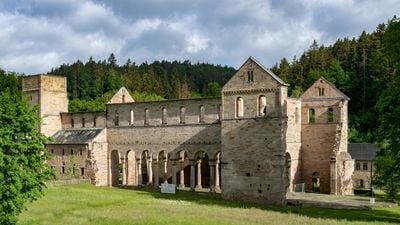
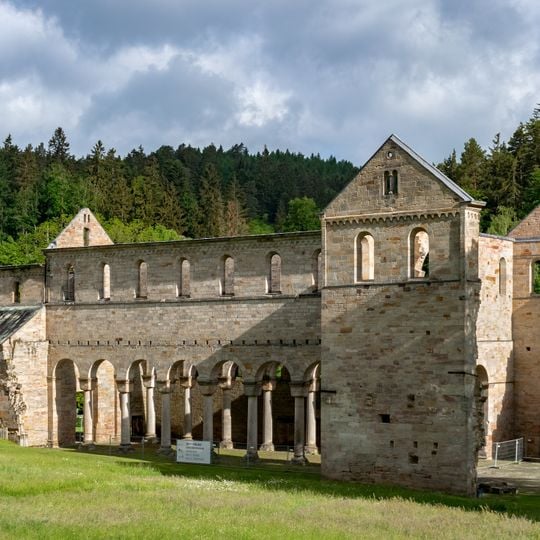
Paulinzella Abbey, Benedictine monastery ruins in Königsee, Germany.

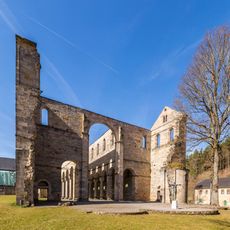
Paulinzella Abbey is a monastery ruin in Königsee featuring sturdy stone walls and thick pillars built in Romanesque style. The site displays the outlines of the church, cloister, and outbuildings that remain visible today.

The monastery was founded around 1100 as a double community where monks and nuns lived separately. After a major fire in the 17th century, the complex was never rebuilt.

Johann Wolfgang von Goethe and Friedrich Schiller visited the monastery ruins and documented their experiences through poetry and guest book entries.

The ruins are open year-round and free to visit at your own pace. The paths through the site are easy to navigate.

After the fire, stones from the abbey were reused to build houses in surrounding villages. Many local buildings still contain materials salvaged from this medieval site.

Location: Königsee

Inception: 1102

Founders: Paulina von Thüringen

GPS coordinates: 50.70250,11.10440

Latest update: December 6, 2025 16:04

Photos
Historic locations in Thuringia

Thuringia contains a notable variety of historic sites, from medieval castles on wooded heights to baroque palaces in landscaped parks. The region preserves Romanesque monastic complexes such as Paulinzella, Renaissance residences including Wilhelmsburg in Schmalkalden, and significant collections like the Lindenau Museum in Altenburg. Beyond architectural landmarks, Thuringia offers geological features: the Saalfeld Fairy Grottoes are considered the most colorful show mine in the world, the Barbarossa Cave near Rottleben is one of Europe's largest anhydrite caves, and the Morassina healing caves in Schmiedefeld have served therapeutic purposes since the 19th century. Cultural institutions range from technical museums such as the Ziegenrück hydroelectric power museum to the Apolda bell foundry museum and botanical installations like the Japanese garden in Bad Langensalza. Historic transportation systems including the Oberweissbach mountain railway, which has covered a vertical rise of 1,060 feet (323 meters) since 1923, complement the offerings. Natural monuments such as the Dragon Gorge near Eisenach, a narrow ravine with rock walls reaching 33 feet (10 meters) in height, and viewpoints like Leuchtenburg above the Saale valley combine natural and cultural experiences.

Reviews

Visited this place? Tap the stars to rate it and share your experience / photos with the community! Try now! You can cancel it anytime.

« Paulinzella Abbey - Benedictine monastery ruins in Königsee, Germany » is provided by Around Us (aroundus.com). Images and texts are derived from Wikimedia project under a Creative Commons license. You are allowed to copy, distribute, and modify copies of this page, under the conditions set by the license, as long as this note is clearly visible.

Discover hidden gems everywhere you go!

From secret cafés to breathtaking viewpoints, skip the crowded tourist spots and find places that match your style. Our app makes it easy with voice search, smart filtering, route optimization, and insider tips from travelers worldwide. Download now for the complete mobile experience.

Around Us App Screenshot

A unique approach to discovering new places

Le Figaro

All the places worth exploring

France Info

A tailor-made excursion in just a few clicks

20 Minutes