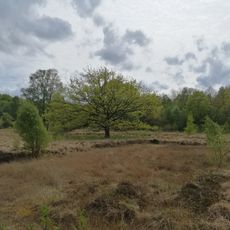
Poppostein, Neolithic dolmen in Sieverstedt, Germany
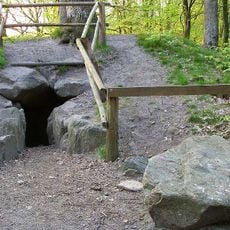
Poppostein is a free-standing dolmen about 2.4 m long, its chamber 2.2 by 1.0 m, bounded by two supporting stones on the long sides, one at the north end and a low sill stone at the open south end. A single granite capstone, the stone that gives the site its name, carries 17 small bowl-shaped hollows. The mound that once covered it is gone.
The megalithic structure was built between 3500 and 2800 BC as a burial site for prehistoric populations. Archaeological evidence suggests the monument served local communities across many generations.
The 17 cup-shaped depressions on the granite capstone were cut during cultic ceremonies in the Bronze Age, according to the Danish article; German researchers link them to prehistoric ritual or to beliefs in the healing power of the drilled stone dust. The site later served as the thingstead of Istedsyssel, and the name Helligbek (holy brook) recalls Bishop Poppo's legendary baptism of Harald Bluetooth around 960.
The site is located east of road B76 between Flensburg and Schleswig and remains open to the public year-round without restrictions. The location is exposed to the elements, so visitors should dress appropriately for changing weather conditions.
The name is often linked to Bishop Poppo, who according to legend baptised King Harald Bluetooth in the nearby Helligbæk around 960, which is why the stone is also called the Baptismal Stone. The Germanist Freerk Haye Hamkens instead derived it from Low German Poppe, "child", but the local vernacular remained Danish into the 19th century, so place names here are almost all Danish.
The community of curious travelers
AroundUs brings together thousands of curated places, local tips, and hidden gems, enriched daily by 94,457 contributors worldwide.