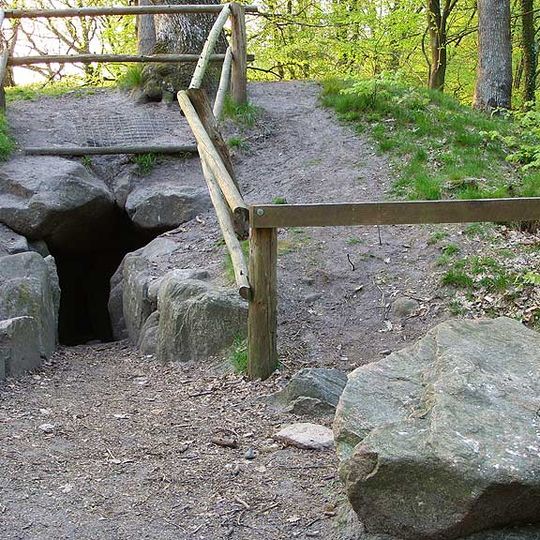
Großsteingrab Idstedt, Neolithic passage grave in Idstedt, Germany.
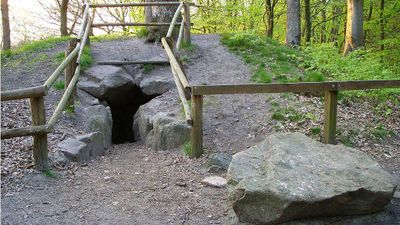
Großsteingrab Idstedt is a Neolithic burial structure with large stone blocks forming a narrow passage leading to a central burial chamber situated beneath an earthen mound. The construction demonstrates the building knowledge of Stone Age people.
The passage grave was built between 3500 and 2800 BCE by the Funnelbeaker culture, making it roughly 5,000 years old. It is one of the few preserved megalithic tombs in South Schleswig. The chamber is oriented east-west and was constructed with nine upright stones and three capstones. A flint axe found in 1962 is the only known find from the site.
The site served as a shared burial place where early farming families laid their dead to rest together. This practice reveals how important community bonds were to these ancient people.
The site is located in Schleswig-Holstein and remains accessible year-round for visitors and researchers. Wear comfortable shoes since the ground can be uneven, and there is no shelter from the weather.
The name Røverhulen, Robbers' Cave, comes from local legend: in the Middle Ages robbers were said to live in the chamber and plunder travellers on the Hærveid, the old army road. The only find recovered here is a flint axe, discovered in 1962.
The community of curious travelers
AroundUs brings together thousands of curated places, local tips, and hidden gems, enriched daily by 94,249 contributors worldwide.