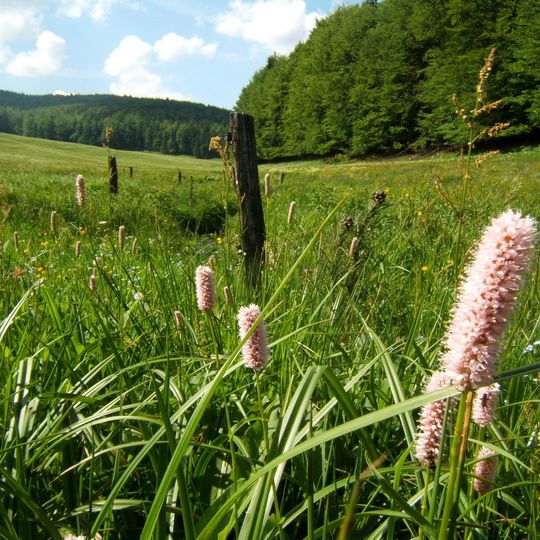
Thüringer Wald Biosphere Reserve, Biosphere reserve in Thuringia, Germany
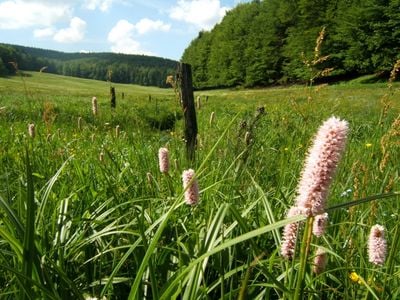
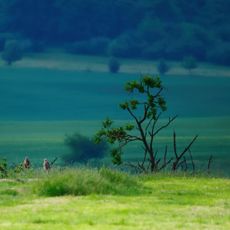
The Thüringer Wald Biosphere Reserve is a UNESCO biosphere reserve in southwestern Thuringia, between Suhl, Ilmenau and Schleusingen. It covers 337 km², about 88% forest, 9% grassland and 0.7% still waters, and is divided into a core zone (3.1%, about 1,043 ha), a management zone and a development zone. The Rennsteig trail crosses it, and the highest point is the Große Beerberg at 982 m.
UNESCO recognized this area as a biosphere reserve in 1979 under its Man and Biosphere Programme, marking the beginning of organized conservation in the region. In the decades that followed, the boundaries and management structure of the reserve were updated more than once.
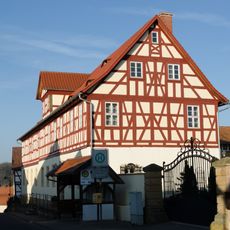
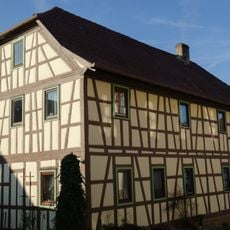
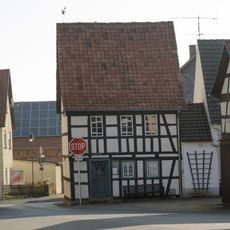
The reserve lies in the Thuringian Forest between Suhl, Ilmenau and Schleusingen, and the Rennsteig ridge trail crosses it. Villages such as Schmiedefeld am Rennsteig, Frauenwald and Vesser sit entirely inside the protected area. In the transition zone, farming, fish farming, forestry and glass manufacture remain part of local working life, and tourism is a major source of income.
The reserve can be reached from several towns including Suhl and Ilmenau, both of which have train connections. Trails are open year-round, but snow in winter can make higher paths more demanding and sometimes slippery.
The reserve is one of the few places in central Germany where black storks nest regularly, a bird far less visible than its white cousin because it favors deep, undisturbed forest. Forest managers are also planting silver firs among the existing trees to help the woodland cope with drier summers.
The community of curious travelers
AroundUs brings together thousands of curated places, local tips, and hidden gems, enriched daily by 94,025 contributors worldwide.