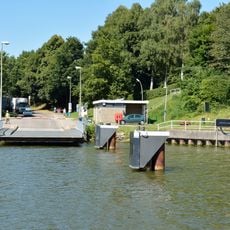
Eider Canal, Historical waterway in Schleswig-Holstein, Germany
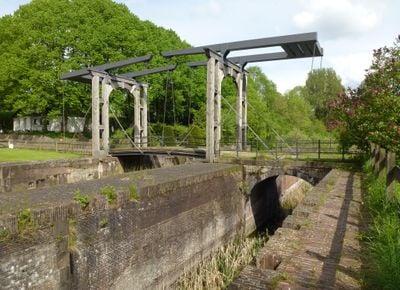
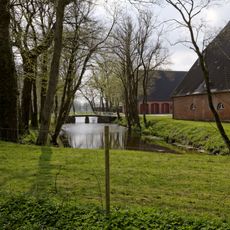
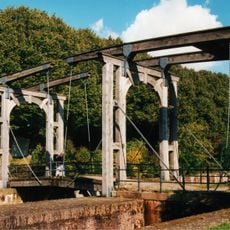
The Eider Canal, also called the Schleswig-Holstein Canal, ran 173 km from Kiel-Holtenau on the Baltic to Rendsburg on the Eider, including 34 km of artificial channel and 130 km of river. Six locks at Holtenau, Knoop, Rathmannsdorf, Königsförde, Kluvensiek and Rendsburg handled a 7-metre height difference. The channel was 28.7 m wide at the surface, 18 m at the bottom and 3.45 m deep.
Duke Adolf I of Holstein-Gottorp proposed a canal across Schleswig-Holstein as early as 1571, but political fragmentation blocked it. After the 1773 Treaty of Tsarskoye Selo incorporated Holstein into the Danish crown, King Christian VII ordered a Canal Commission on 14 April 1774. Construction began in July 1777 at Holtenau and ended in autumn 1784; the 34 km artificial cut, with six locks, linked the Kieler Förde to the Eider. The Kiel Canal replaced it in the 1880s and 1890s, reusing parts of its course.
The canal's name changed with politics: known as the Schleswig-Holstein Canal from 1784, it was renamed Eider Canal by the Danish crown in 1853 to counter the idea of a single Schleswig-Holstein, then reverted after Prussia took the region in 1866. Three brick packing houses built in 1783 at Holtenau, Rendsburg and Tönning stored wool, cereals, coffee and salt.
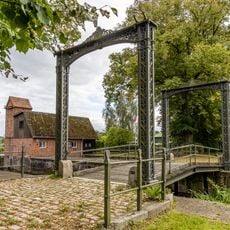
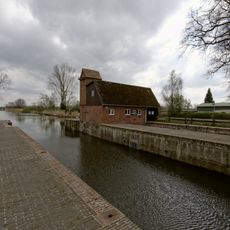
Visitors can best observe the locks from pathways and viewing areas beside the water, especially when ships pass through. The best time to explore is during the warmer months, when leisure boats and local vessels are also in operation.
Six locks spanned about 7 metres of height between the Baltic and the upper Eider: at Holtenau, Knoop, Rathmannsdorf, Königsförde, Kluvensiek and Rendsburg. In its roughly hundred years of service some 300,000 ships passed through, and three brick packing houses for wool, cereals, coffee and salt stood at Holtenau, Rendsburg and Tönning.
The community of curious travelers
AroundUs brings together thousands of curated places, local tips, and hidden gems, enriched daily by 94,457 contributors worldwide.