Goethe House, Literary museum in Innenstadt district, Germany
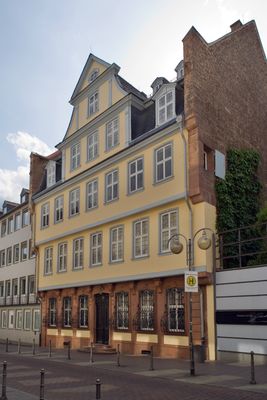
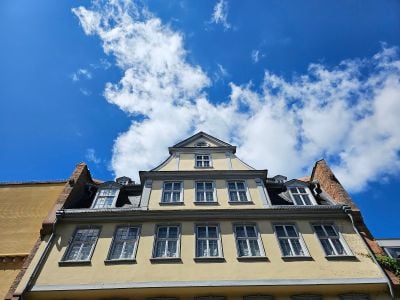
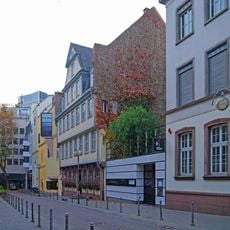
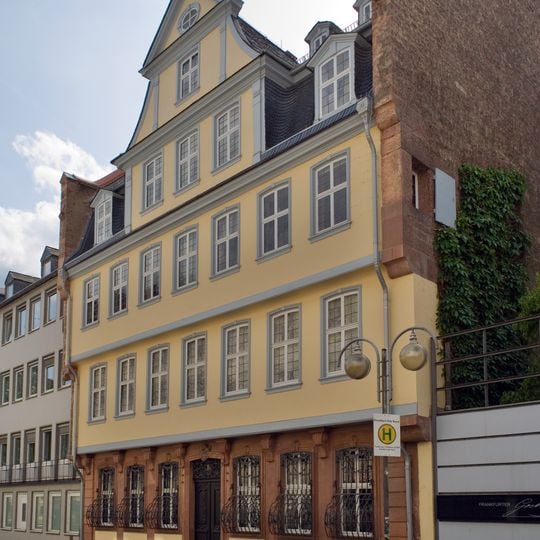
The Goethe House is a four-storey building on the Großer Hirschgraben, rebuilt after its destruction in 1944. Its yellow upper facade is divided by grey horizontal bands, with a gabled roof and dormer windows above rows of white-framed windows. The ground floor is brown stone, with a dark central door flanked by windows covered by curved metal grilles.
The house was first built around 1618 for Flemish goldsmith Matthis van Hinsberg. In 1733 Cornelia Goethe, the poet's grandmother, bought two adjoining properties and joined them; her son Johann Caspar rebuilt them in 1755–56 as one late-baroque house. Johann Wolfgang Goethe was born here on 28 August 1749 and lived in it until he left for Weimar in 1775.
The house is run by the Freies Deutsches Hochstift, the civic scholarly society founded by geologist Otto Volger, which bought it in 1863 and opened it as the first public memorial to Goethe, twenty-two years before the one in Weimar. An old Frankfurt joke claims true locals never go: a dying man promises, "Liewer Gott, lass misch noch leewe – isch geh derr aach ins Geede-Haus!"
The house can be explored together with neighboring museums through combination tickets. The rooms are connected by stairs, so comfortable walking shoes and some mobility are recommended.
Inside the house is an astronomical clock from 1746 that displays not just the time but also moon phases and zodiac signs through an intricate system of rotating rings. This handcrafted timepiece is a rare example of 18th-century mechanical engineering.
The community of curious travelers
AroundUs brings together thousands of curated places, local tips, and hidden gems, enriched daily by 93,660 contributors worldwide.