Hanstein Castle, Medieval castle ruins in Bornhagen, Germany
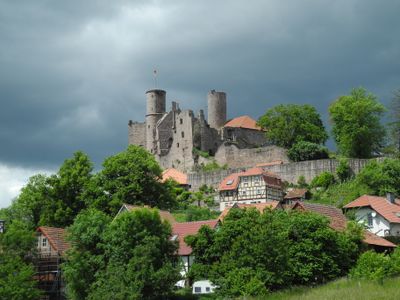
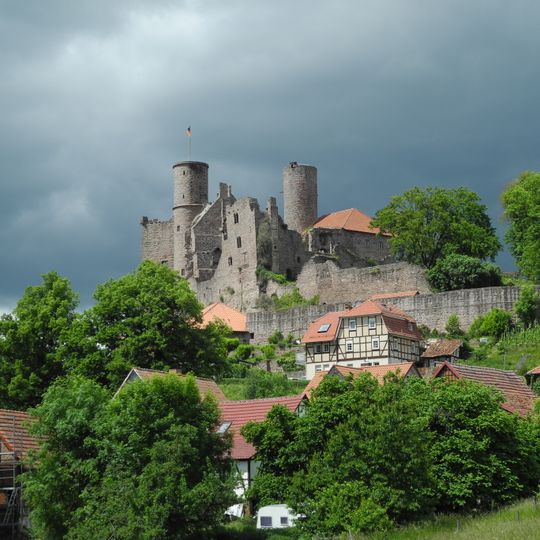
Hanstein Castle is a ruined hilltop castle on a 390-metre sandstone spur above Bornhagen, with a long grey curtain wall along its base, a round north tower topped by a mast and flag, a shorter round south tower, and ruined walls with empty window openings between them. A building with a steep red gabled roof stands inside the walls, and the hillside below is covered with trees and red-roofed houses.
Hanstein Castle was first mentioned in 1070, when Henry IV had it destroyed; it belonged to Count Otto of Northeim. In 1308 Heinrich and Lippold von Hanstein began rebuilding the castle for the Archbishop of Mainz, first in wood and then in stone. Swedish troops damaged it in the Thirty Years' War, and it has not been permanently inhabited since.
The name Hanstein probably comes from Old High German hagan, an enclosed place, and stein, rocky ground. The castle chapel's triptych altar is kept in the Catholic church of Rimbach, and the chaplain there served the castle. Since 2008 the ruin has marked 700 years, and festivals are held on the grounds each year.
Access to the fortress is via marked hiking trails starting from Bornhagen, with guided tours available to explore the fortifications. Wear sturdy shoes because the ground is uneven and some paths climb steeply.
During Germany's division, one of the towers served as a border surveillance post for East German guards because the ruins sat near the inner German border. This Cold War role adds an unexpected chapter to its story.
The community of curious travelers
AroundUs brings together thousands of curated places, local tips, and hidden gems, enriched daily by 93,386 contributors worldwide.