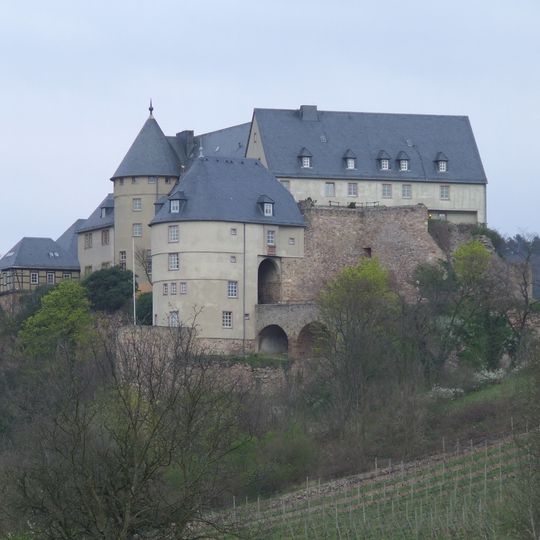
Ebernburg Castle, Hill castle in Ebernburg, Bad Kreuznach, Rhineland-Palatinate, Germany
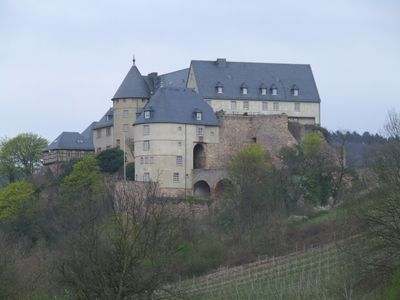
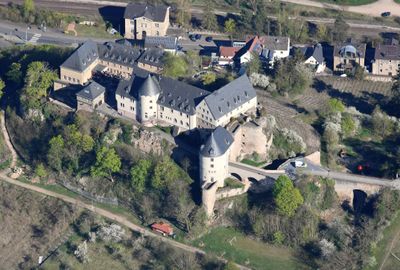
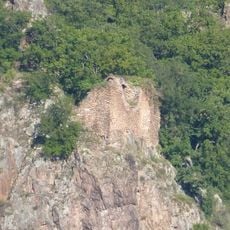
Ebernburg is a hilltop fortress near Bad Münster am Stein with surviving walls and stone structures that showcase medieval construction. The ruins still display the layout and building techniques of a defended noble residence that once functioned as both home and administrative center.
Count Ruprecht and Count Johann of Sponheim-Kreuznach built the castle in 1338. In 1448 it passed to the Sickingen family, and Schweickhardt von Sickingen and his son Franz expanded it in 1482 and armed it with heavy artillery. After Franz's death in 1523 it was burned, rebuilt in 1542, and demolished again after 1697; Karl Günther rebuilt it from 1838.
The castle's name comes from a legend: besiegers heard a boar squeal daily and assumed supplies were plentiful, so they withdrew. In 1522, chaplain Johannes Oekolampad read the Gospels in German during Mass, making the service the first Protestant one at the castle. Since 1914, the Ebernburg Foundation has owned the castle and leased it to the Ebernburg Association.
The castle stands on a hilltop at 185 m above sea level, reached on foot via paths from the Ebernburg district; sturdy shoes are advisable. The site is freely accessible at all times, with no on-site facilities, so bring water and check services in Bad Münster am Stein-Ebernburg below. The bronze Hutten-Sickingen monument stands on the slope beneath the castle.
The bronze Hutten-Sickingen Monument below the castle was made in 1889 by sculptor Karl Cauer of Bad Kreuznach, executed by his sons Robert and Ludwig. It shows Ulrich von Hutten and Franz von Sickingen, the knight who offered Luther asylum here in 1521 and died in 1523 in the Trier Feud he had started.
The community of curious travelers
AroundUs brings together thousands of curated places, local tips, and hidden gems, enriched daily by 94,345 contributors worldwide.