Karlshöhle and Bärenhöhle, Cave entrance and prehistoric site in Sonnenbühl, Germany
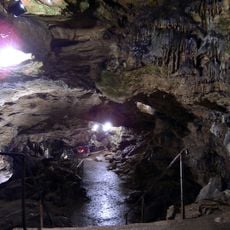
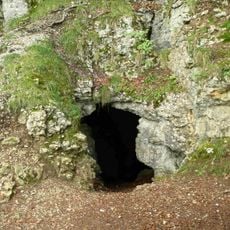
Karlshöhle and Bärenhöhle are two connected caves in Sonnenbühl that wind through limestone formations from the White Jurassic period. The system displays natural rock shapes and contains bones and artifacts from the Ice Age.
The first cave was found in 1834 when a schoolmaster came upon it while gathering herbs, while the second was discovered in 1949 when someone followed a bat into a hidden opening. Both caves were later connected and opened to visitors.
The cave's name comes from the many cave bear skeletons found inside; skulls, bones and a reconstructed bear skeleton are on display. The finds span from the Pleistocene, over 1.5 million years ago, to the 17th century, and the opening in the first hall's ceiling is called Fauthsloch after the teacher who found it in 1834.
Tours run daily from April to October and on weekends in March and November; the cave is closed to visitors from December to February. The guided route covers 271 metres and takes about 30 minutes, exiting on the far side of the hill with a walk back to the entrance. The first half is accessible without steps. Temperatures stay at 8–10 °C year-round.
Above the Bärenhöhle sits the Traumland theme park, opened in 1974, whose Ferris wheel is described as the highest-located in Europe. The cave's name comes from the many cave bear skeletons found inside, and a fully reconstructed bear skeleton is displayed in the Bärenhöhle itself.
The community of curious travelers
AroundUs brings together thousands of curated places, local tips, and hidden gems, enriched daily by 93,587 contributors worldwide.