Goldloch, Natural cave in Lichtenstein, Germany
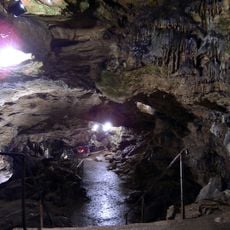
Goldloch is a cave within the Gaisspitzberg mountain near Lichtenstein that extends several dozen meters deep into the rock. The chambers contain limestone formations and stalactites, with the largest space reaching about six meters in height.
The name Goldloch has two presumed origins: a larger find of gold coins in 1778, or the golden-yellow colour of the Madonna figure at the rear of the cave, caused by iron ochre. The cave itself formed through a fault in the Lower Felsenkalk Formation of the Swabian Alb.
The name Goldloch may come from the golden-yellow colour of a painted Madonna and Child at the rear of the cave, coated by iron ochre that once glowed more strongly in torchlight. Legend holds that kissing the figure's foot brings wealth.
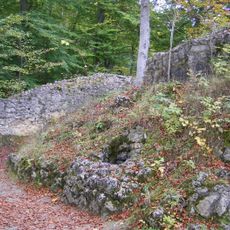
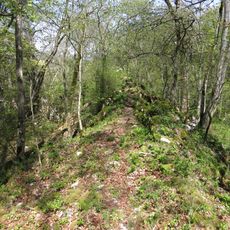
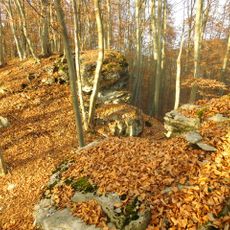
The cave is unmarked and hidden from the path: about 50 metres before the Kalkofenhütte a trail leads to the Gießstein, and after roughly 200 metres a steep, unbuilt footpath drops 30–40 metres down the slope to the entrance. Because of the bats living there, the cave should not be entered from October to March.
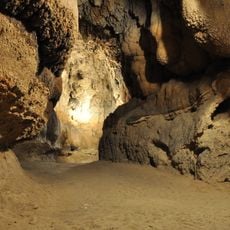
One striking feature is a round chamber with a domed ceiling and surrounding fallen rocks and clay deposits that create a distinctive pocket within the cave. This formation sets it apart from the rest of the passages.
The community of curious travelers
AroundUs brings together thousands of curated places, local tips, and hidden gems, enriched daily by 94,256 contributors worldwide.