Botanischer Volkspark Blankenfelde-Pankow, Public botanical park in Pankow, Germany
The Botanischer Volkspark Blankenfelde-Pankow is a public botanical garden in Berlin's Pankow district, with greenhouses, planted areas, and a small animal section. Wide paths connect the different zones and let visitors move through a variety of plant collections at their own pace.
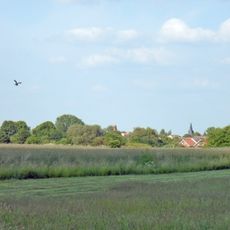
The park was laid out in 1909 on a disused sewage-farm site owned by the city, on the initiative of garden director Albert Brodersen, as Berlin's central school garden. The western part kept its glacial relief around the Zingerteiche ponds, while the eastern half was farmed on the grid of the former sewage fields. In 1911 an oak-hornbeam wood was planted, and in 1912 the Geological Wall was moved here from the Humboldthain park.
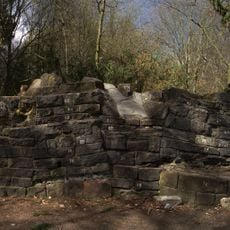
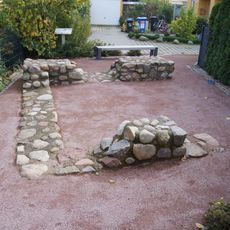
One section of the park features a geological wall where visitors can see and touch rocks from different parts of Central Europe. The wall is still used as a teaching space today, especially by school groups and curious passersby.
The park is easy to explore on foot, as the paths are wide and generally well kept. After rain, some sections can get slippery, so sturdy footwear is a good idea.
The Geologische Wand, moved here in 1912 from the Humboldthain park, is a teaching wall showing a cut through Central Europe's upper crust; the source gives 123 rock types, while the park's own summary says 150. It stands as a monument alongside the Stone Bridge.
The community of curious travelers
AroundUs brings together thousands of curated places, local tips, and hidden gems, enriched daily by 93,764 contributors worldwide.