Neuenburg Castle, Medieval castle in Freyburg, Germany
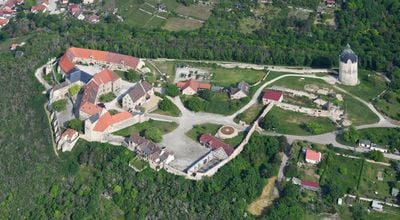
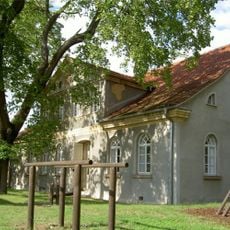
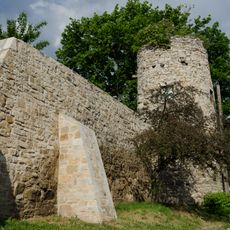
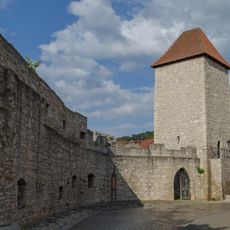
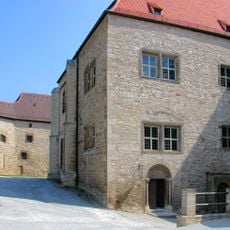
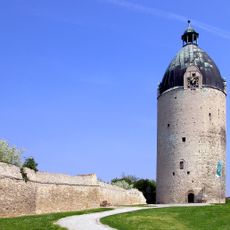
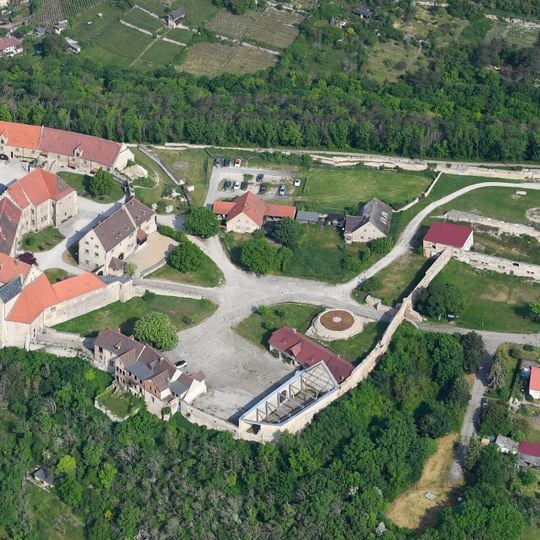
Neuenburg Castle occupies a spur above the eastern bank of the Unstrut, its buildings of light grey Muschelkalk and white plaster grouped around an irregular courtyard. A long red-roofed wing with two towers stands behind white walls, and a round stone tower with a pointed roof rises beside a low circular foundation. The complex is divided into a core castle with the Schlossbau and Küchenmeisterei and an older outer bailey framed by gallery wings.
Ludwig the Springer founded the castle around 1090 after acquiring lands near Freyburg through his marriage to Adelheid, widow of Count Palatine Frederick III of Goseck. It became the largest castle of the Landgraves of Thuringia and hosted Emperor Frederick Barbarossa and Saint Elizabeth of Thuringia. After the Ludowingians died out in 1247, the Wettins took over; Duke August of Saxony converted it into a hunting lodge in the mid-16th century, and from 1656 to 1746 it served as a secondary residence of the Dukes of Saxe-Weissenfels.
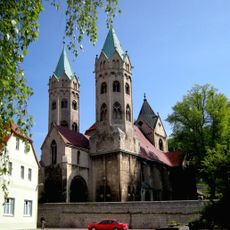
The name Neuenburg simply means "new castle", recorded in medieval charters as castrum Nuwenburg and Novum Castrum. Since 1990 the complex has housed a museum and catering facilities, and the double chapel of around 1180, a stop on the Romanesque Road, is the piece visitors single out.
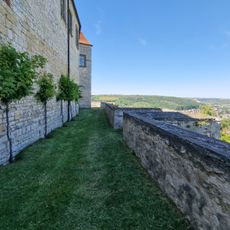
The castle is open during the warmer months and sits on a hill accessible by foot from the town center. Sturdy shoes are advisable because the climb is steep and interior stairs within the old structures are narrow and uneven.
Around 1185 the poet Heinrich von Veldeke completed his Eneasroman at Neuenburg, a German adaptation of the French Roman d'Eneas. The castle thus hosted literary work in the same decades in which its double chapel was built, around 1180.
The community of curious travelers
AroundUs brings together thousands of curated places, local tips, and hidden gems, enriched daily by 94,632 contributors worldwide.