Burgruine Breitenegg, Medieval castle ruin in Breitenbrunn, Germany.
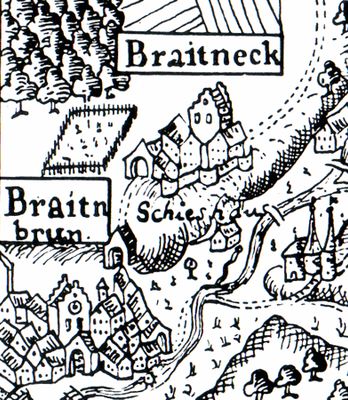
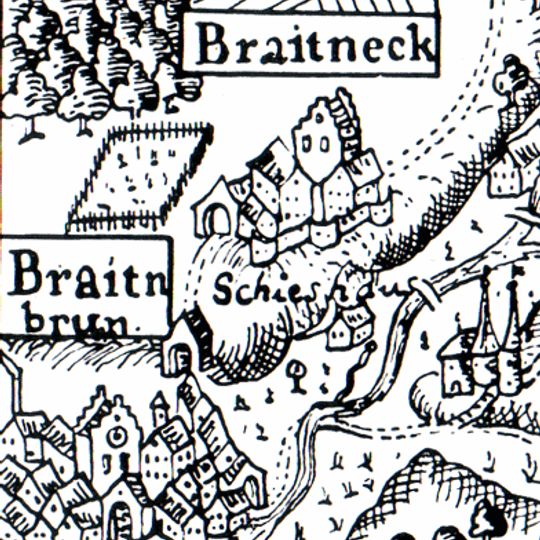
Breitenegg is a castle ruin on a mountain spur in Bavaria, Germany, with preserved wall sections and tower foundations. The site sits on a jutting elevation above the valley and still shows parts of the former fortification structures.
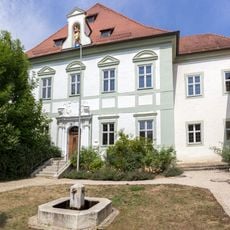
Breitenegg Castle was first documented in 1229 and built around that year by the Lords of Breitenbrunn. It passed to Werner V of Laaber from about 1247 to 1289, then to Count Gebhard VII of Hirschberg, who sold it in 1302 to Hadamar II of Laaber. In 1473 it was sold to the Wildenstein brothers; around 1550 the family turned Protestant and lost the lordship, which the Wittelsbachs took over in practice. In 1624 Emperor Ferdinand enfeoffed Johann T'Serclaes Tilly with the castle, and Tilly's great-granddaughter Anna Maria left it to build the Tilly Palace in the valley.
The remains show stonework from different medieval periods, reflecting how builders worked at that time. If you look closely, you can spot different techniques used in the walls and mortar.
The site sits on a hillside and requires a short walk from the valley floor to reach the ruins. Sturdy footwear makes sense since the ground is uneven and some sections are hard to access.
The 12-metre-high bergfried survives only in part, and its roughly eight-by-eight-metre footprint shows how compact the main tower was. The surrounding ring wall was built of buckelquader and rubble stone, two masonry types a visitor can still tell apart in the surviving stretches.
The community of curious travelers
AroundUs brings together thousands of curated places, local tips, and hidden gems, enriched daily by 94,304 contributors worldwide.