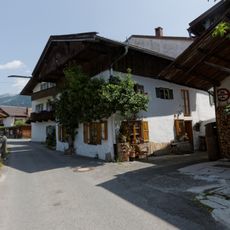
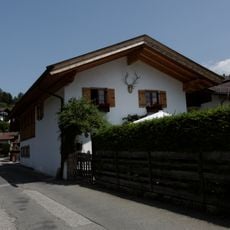
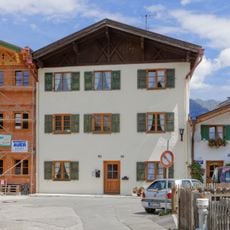
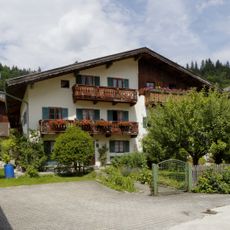
Buckelwiesen bei Mittenwald, Protected geotope near Mittenwald, Germany.
The Buckelwiesen near Mittenwald are a geotope of grass-covered ground swells, elongated drumlins of moraine gravel pushed up by the advancing Isar glacier at the end of the Würm ice age and reshaped by freeze-thaw processes and meltwater. About 1,000 of the roughly 1,200 hectares remaining in Bavaria lie around Mittenwald, Krün and Klais.
The mounds formed at the end of the Würm glaciation, when the advancing Isar glacier pushed moraine gravel into drumlins; freeze-thaw cycles and meltwater flowing between the swells then reshaped them. Monks cleared the first pasture here in the 8th century, and a mowing is documented in 1406. Before World War II the Reich Labour Service set up camps at Barmsee and Tennsee to level the meadows; a planned large settlement was never built.
Monks cleared the first pasture here in the 8th century, and a mowing is documented in a charter from 1406. Farmers receive EU subsidies for managing the mounds traditionally and for clearing encroaching shrubs, which keeps light-demanding species from being displaced.
Two areas of Buckelwiesen near Mittenwald are protected, so visitors should stay on paths and avoid walking across the mounds themselves. The ground is uneven, with humps and hollows that are easy to trip over, so sturdy shoes help. The meadows lie around Mittenwald, Krün and Klais in the Niederwerdenfelser Land.
The mounds formed beneath spruce trees, whose roots and shade protected the limestone from dissolving, so the humps survived there while frost and meltwater shaped the open ground. Over 200 plant species grow on the nutrient-poor, acidic grassland, among them stemless gentian, red vanilla orchid and white silverweed.
The community of curious travelers
AroundUs brings together thousands of curated places, local tips, and hidden gems, enriched daily by 93,712 contributors worldwide.