Monastery Spieskappel, Religious monastery in Frielendorf, Germany
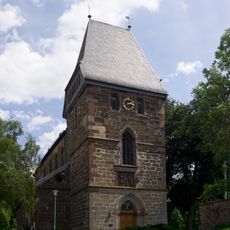
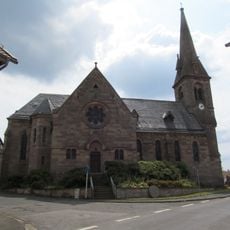
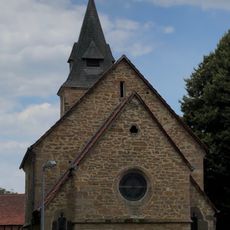
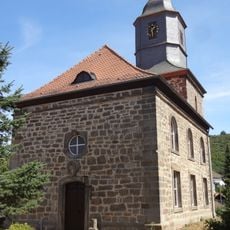
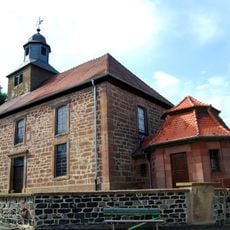
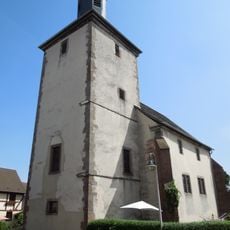
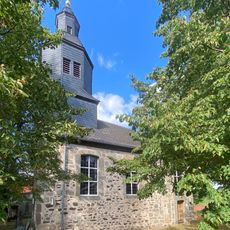
Monastery Spieskappel is a former Premonstratensian complex in Frielendorf, consisting of a canons' foundation and a nuns' convent. Its flat-roofed Romanesque basilica, built around 1145–1255, retains the nave and left aisle; the right aisle and east end were demolished around 1500. The west tower was replaced by a late Gothic square tower between 1500 and 1504, and the tower hall has a star vault from 1505.
The monastery sustained significant damage in a fire in 1301 and was later looted during the Sterner War in 1372. These events shaped the complex's development over time.
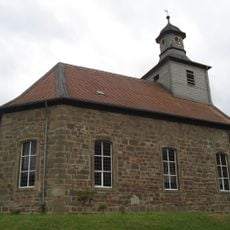
The church is still the Protestant parish church of Frielendorf-Spieskappel, and the village name Spieskappel recalls the Premonstratensian canons' foundation of 1143. In the arcades toward the north aisle the supports alternate, and the capitals carry human figures among leaf tendrils or heads with intertwined hair. In the parish garden stands a late Gothic font basin dated 1509, carved with the initials of Abbot Johannes Zuddel, who held office from 1487 to 1518.
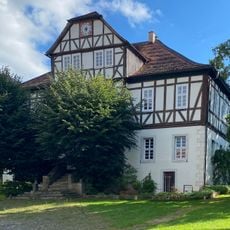
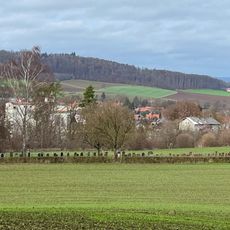
The church stands in Oberkappel, a section of Spieskappel within the Frielendorf municipality; the former canons' monastery site in Unterkappel now holds a Hexion chemical plant. The church is used by the Protestant parish of Frielendorf-Spieskappel, so visits should be timed around services. The whole monastery area is protected under § 18 of the Hessian monument protection law, with the church and the surviving monastery building also listed individually.
In the parish garden stands a late Gothic font basin dated 1509, carved with a flat relief bearing the initials of Abbot Johannes Zuddel, who led the monastery from 1487 to 1518 and had already donated a chalice in 1503.
The community of curious travelers
AroundUs brings together thousands of curated places, local tips, and hidden gems, enriched daily by 92,751 contributors worldwide.