Burg Bodenheim, Medieval castle in Weilerswist, Germany.
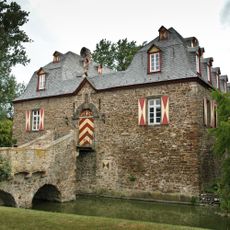
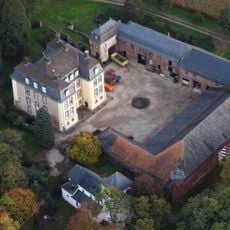
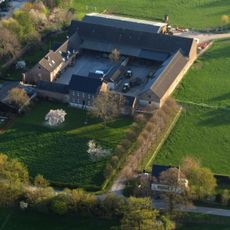
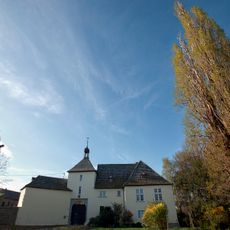
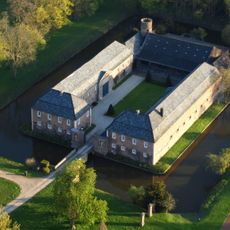
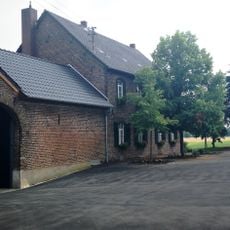
Burg Bodenheim is a two-part water castle of the former Kerpen-Lommersum domain in Bodenheim, part of Weilerswist. Its oldest section is the west wing with a stair tower holding a stone spiral staircase, built in the early 15th century. The narrow connecting wing followed in the second quarter of the 16th century, and Dietrich von Tomberg had the east wing and the present gatehouse built in 1589, dated by iron anchors and the keystone above the gate.
Bodenheim is first documented around 950, when an Eigils held a noble estate there, probably a motte-and-bailey castle. By 1312 a "castrum Bodenem" appears in a feudal register of the Duke of Brabant; around 1350 the castle was already a two-part water castle with a main and outer bailey. After plundering and fire in the late 16th century, Dietrich von Tomberg rebuilt the east wing and gate in 1589, and in 1594 Georg von Tomberg remodelled the west wing. The Kieselstein family, former tenants, bought the castle in 1930.
The name Bodenheim is first recorded in 1136 with Seburg von Bodenheim, and the castle passed by inheritance through the families Vischenich, Brent von Vernich, Tomberg and Hersel. Dietrich von Tomberg had the east wing and the present gate built in 1589, and the iron anchors and keystone above the entrance still carry that date. The castle chapel he established held medieval wooden sculptures until the 1960s, when they went to the Museum Schnütgen in Cologne.
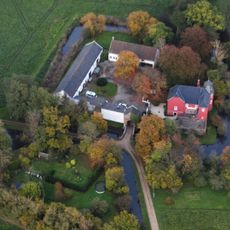
Burg Bodenheim lies in the hamlet of Bodenheim, part of Weilerswist in the Euskirchen district, and is reached by local roads rather than long-distance trails. The grounds are privately owned by the Kieselstein family, who bought the estate in 1930, so visits depend on the owners' arrangements. The castle stands in a water-rich lowland near the Erft and the Lommersumer Mühlenbach.
The oldest part is the west wing with its stair tower, built in the early 15th century and holding a stone spiral staircase inside. The east wing and the present gatehouse followed in 1589 under Dietrich von Tomberg; iron anchors and the keystone above the gate carry the year. A chapel he installed held medieval wooden sculptures until the 1960s, now in Cologne's Museum Schnütgen.
The community of curious travelers
AroundUs brings together thousands of curated places, local tips, and hidden gems, enriched daily by 93,600 contributors worldwide.