Burg Rheinberg, Medieval castle ruin in Lorch, Germany
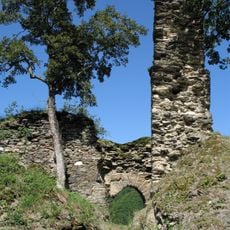
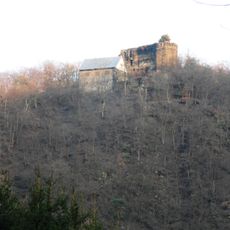
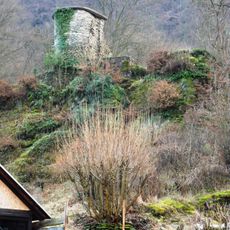
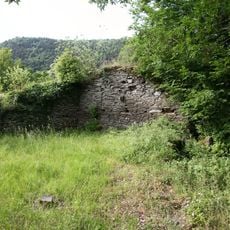
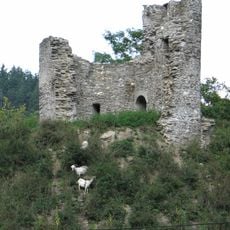
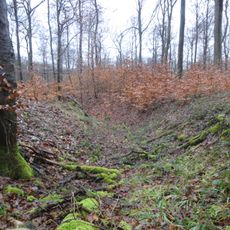
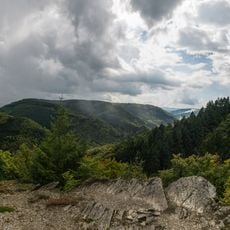
Burg Rheinberg is a ruined hill castle on a rocky spur above the Wisper valley, about 250 metres above sea level. Its surviving keep stands on a rock base in the south, rises up to 13 metres and still has three storeys. The whole complex measures 60 metres long by just over 20 metres wide, and the approach from the north crosses a neck ditch and the castle gate into the outer ward.
A first castle was probably built around 1165 by the Archbishop of Mainz and enfeoffed to the Rhinegraves in 1170; ministerials of Heppenheft held it as Burgmannen from about 1250. In 1279 Archbishop Werner von Eppstein quarrelled with Rhinegrave Siegfrid von Rheinberg, and the Mainz besiegers threw up Burg Blideneck 500 m to the north and the Aachener Schanze to the west. Rheinberg was taken and largely destroyed in 1280, rebuilt in 1315 with the present keep, and became a Kurpfalz fief in 1399.
The castle became a Ganerbenburg around 1399, when it passed as a fief to the Electorate of the Palatinate and was divided among several families who lived there together. The name Rheinberg comes from the Rhinegraves of Rheinberg, the noble family who held it from 1170.
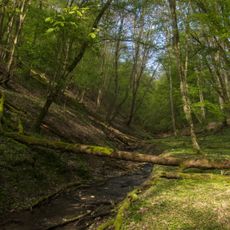
The ruin is private property and entering is forbidden; the walls are at risk of collapse and no stabilisation work is carried out. It stands in dense high forest and can only be reached on narrow, partly steep footpaths. The keep still rises up to 13 metres in three storeys, but it should be viewed from outside the site.
By 1374, seven noble families shared residence in this castle simultaneously, an unusual arrangement called Ganerbenburg in medieval German architecture. This shared living arrangement reveals the complexity of property ownership and social structures in that era.
The community of curious travelers
AroundUs brings together thousands of curated places, local tips, and hidden gems, enriched daily by 94,226 contributors worldwide.