Burg Ehrenstein, Medieval castle ruins in Ilmtal, Germany
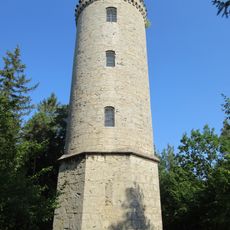
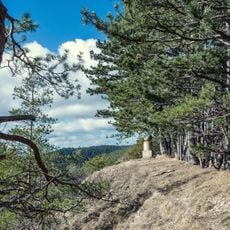
Burg Ehrenstein is a ruined hill castle on a shell-limestone spur of the Buchenberg at 420 m above sea level. Its core measures about 36 m by 11 m, narrowing to 8 m at the west end. The four-storey Palas is divided by an internal wall; at its east end stands the 25 m high bergfried, 7.0 by 10.5 m with walls up to 2.5 m thick, entered from the top floor of the middle building. A ring wall with three round bastions and a ditch and rampart on the east side complete the remains.
The surviving walls date mainly from a 14th-century building phase, though the castle may have been founded in the 12th century. It belonged to the Counts of Schwarzburg from the start and passed to the Blankenburg line in 1275. A major expansion came under Count Günther XXVIII, imperial court master. In 1448, during the Schwarzburg house war and the Saxon Fratricidal War, it was besieged and taken, probably its only military action. Pledged in 1587, it decayed; by 1610 it was uninhabited and dilapidated.
The ruin gave its name to a literary circle around 1900, when a Burggemeinde was founded to maintain it and fitted out a room in the main house for meetings. The local poet Hugo Greiner set works here in 1903, including "Der Sang von Ehrenstein", "Das Gänseliesel von Ehrenstein" and "Die Hexe".
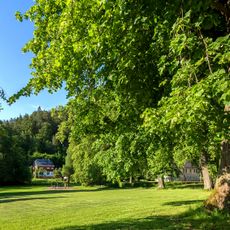
The ruins are accessible on foot and offer views across the surrounding valley. Visitors should be aware of uneven ground and exposed stone edges, especially during wet weather.
Goethe visited the ruin in 1777 and recorded his impressions through drawings, providing a visual record of how the site appeared at that time. These sketches are now valuable sources for understanding the structure's earlier condition.
The community of curious travelers
AroundUs brings together thousands of curated places, local tips, and hidden gems, enriched daily by 92,714 contributors worldwide.