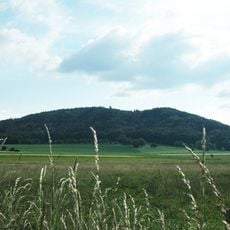
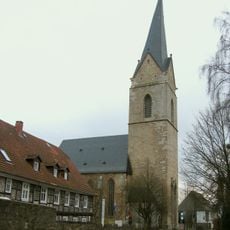
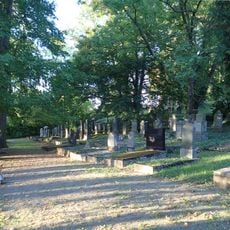
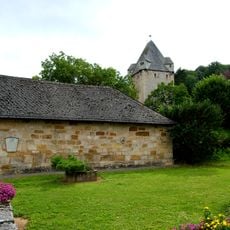
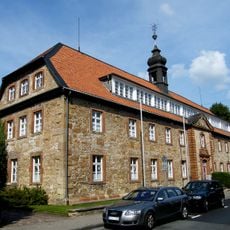
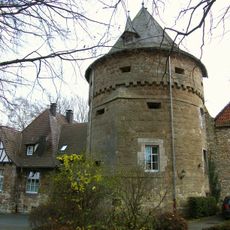
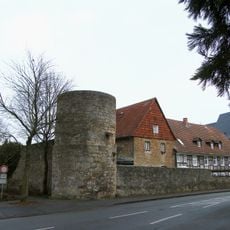
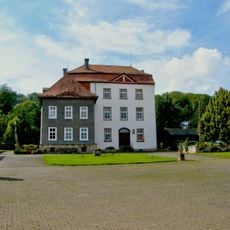
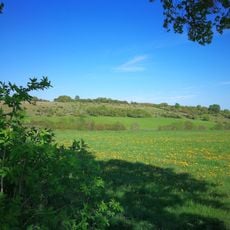
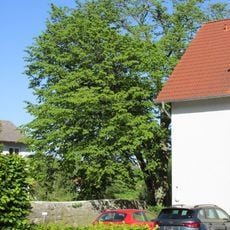
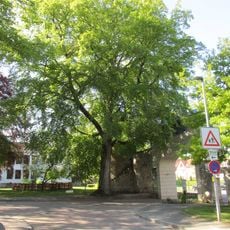
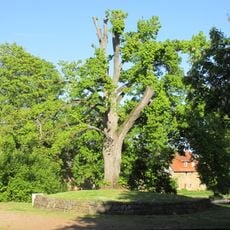
Eisenberg castle ruins, Medieval castle ruins in Korbach, Germany.
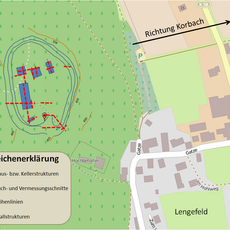
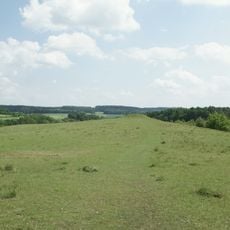
Eisenberg Castle ruins stand at approximately 558 meters elevation with remnants of defensive walls and rounded tower structures made of stone. The site includes traces of residential buildings and kitchen facilities visible within the inner sections of the fortification's perimeter.
Eisenberg Castle was probably built around 1200, as pottery from the main castle ditch dates to that period; the builders are unknown, though the Counts of Waldeck or the Lords of Itter are candidates. It is first documented in 1367 as Waldeck property. From 1487 to 1692 it served as the residence of the Waldeck-Eisenberg line, was expanded into a palace in 1520, and was demolished from 1749, its stone reused as building material.
The castle gave its name to the Eisenberg line of the House of Waldeck, which resided here from 1487 until the line died out in 1692. The last resident, Count Heinrich Wolrad, restored the buildings around 1662; his coat of arms and that of his wife Juliane Elisabeth, dated 1662, are recorded on the site. The nearby ridge path is called Goldspur Eisenberg, recalling the old gold mining of the Eisenberg.
The site is accessible via marked trails leading to the elevated fortification and remains open year-round to visitors. Wear sturdy footwear since the terrain is uneven and paths wind through the ruins.
The residential quarters and kitchen areas visible within the walls show how densely populated this hillfort once was. These traces of everyday life remain visible today in the foundation stones and structures.
The community of curious travelers
AroundUs brings together thousands of curated places, local tips, and hidden gems, enriched daily by 94,104 contributors worldwide.