Fürstenberg Castle, Medieval castle ruins in Höingen, Germany
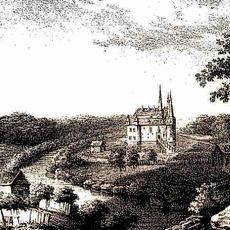
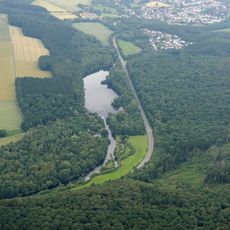
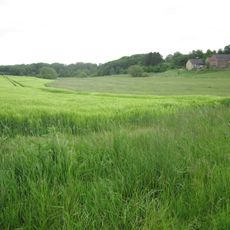
Fürstenberg Castle is a ruined hill castle on the Fürstenberg above the Ruhr, opposite Neheim-Bergheim but on the Höingen side. Its inner bailey stood on the eminence called Richters Köpfchen, where scattered remains of a small medieval stone castle survive; the outer bailey lay farther off on the site of the present Chapel on the Fürstenberg. Ring-shaped medieval ramparts are still visible in the woods and are protected as a Bodendenkmal.
First documented in 1295, when the castellan Hermann of Fürstenberg is named, the castle was destroyed by Count Everd of the Mark in 1303/04, rebuilt by Archbishop Henry (who signed two documents there on 8 December 1309), destroyed again by Count Engelbert II of the Mark in 1311, rebuilt in 1313, and finally destroyed in 1343/44 by the allied counts of Arnsberg and the Mark. After the County of Arnsberg passed to the Cologne electors in 1368, the border castle lost its importance.
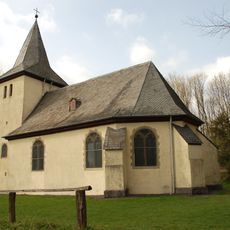
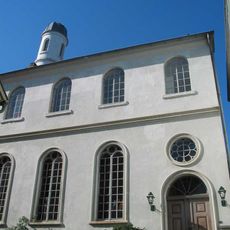
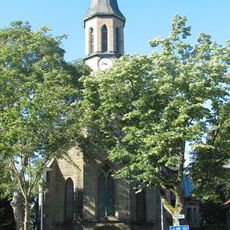
The Chapel on the Fürstenberg, documented since 1429, shows how religion shaped the design of the site. People visiting today can still see how faith and building traditions were intertwined in this place.
The site is easy to reach and can be explored on foot, with clear paths to both fortification areas. Visitors should wear sturdy shoes since the ground is uneven with rocky sections.
The fortress gave a family its name: a man called Hermann, who came from the Binolen family, adopted the name Fürstenberg after becoming the first knight of this castle. This was the origin of the House of Fürstenberg, which took its name directly from the site.
The community of curious travelers
AroundUs brings together thousands of curated places, local tips, and hidden gems, enriched daily by 94,453 contributors worldwide.