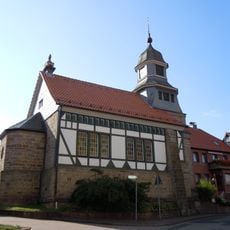
Burg Gieselwerder, Medieval castle ruins in Gieselwerder, Germany
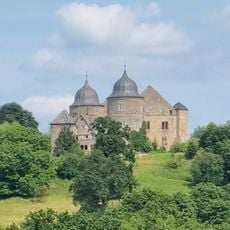
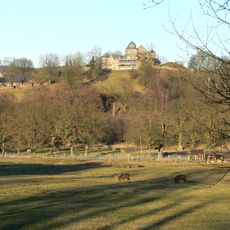
Burg Gieselwerder is a medieval castle ruin on the western bank of the Weser River in Gieselwerder. The surviving foundations and stone walls reveal the original layout of a fortification covering roughly 40 by 20 meters.
A small water castle with a manor house, keep and outbuildings stood on the former Weser island of Gieselwerder in the 11th century. From about 1231 it belonged to Mainz bishop Siegfried III, who installed the Counts of Dassel as burgmanns; Mainz lost it in 1257 to the Welf Albrecht the Great. It served the Lords of Werder as an administrative seat until 1538, after which the uninhabited site decayed.
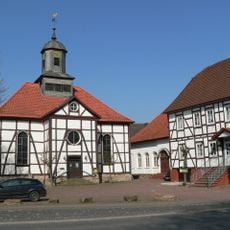
The name Gieselwerder comes from the former Weser island on which the castle stood. Until 1538 the castle was the seat of the Lords of Werder, and the court and the toll office for water and land tolls stayed there after the administration moved to Sababurg. Since 1967 the half-timbered house on the site has served the community as its town hall.
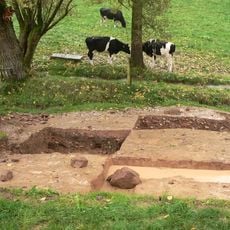
The site lies in Gieselwerder, part of the Wesertal municipality in the Kassel district of Hesse. The nearest train station is in Hann. Münden, about 15 kilometres away, from where a bus or taxi continues to the village. The remains of the moat wall and the keep's foundation stand by the former Weser island, and the half-timbered town hall on the spot can be viewed from outside.
During bridge construction in 1899, workers uncovered oak planks holding iron cannonballs from the Thirty Years War in the riverbed below. These discoveries suggest the castle played a role in regional conflicts of that era.
The community of curious travelers
AroundUs brings together thousands of curated places, local tips, and hidden gems, enriched daily by 93,734 contributors worldwide.