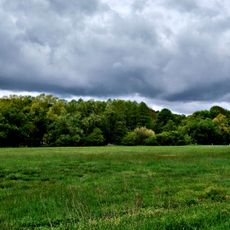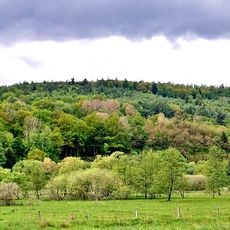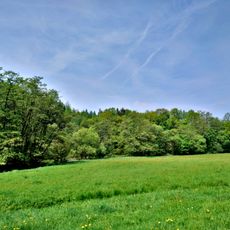
Stolzenberg Castle, Medieval castle ruins in Bad Soden-Salmünster, Germany.
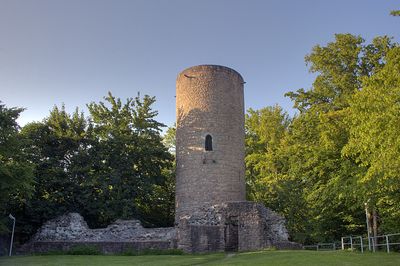
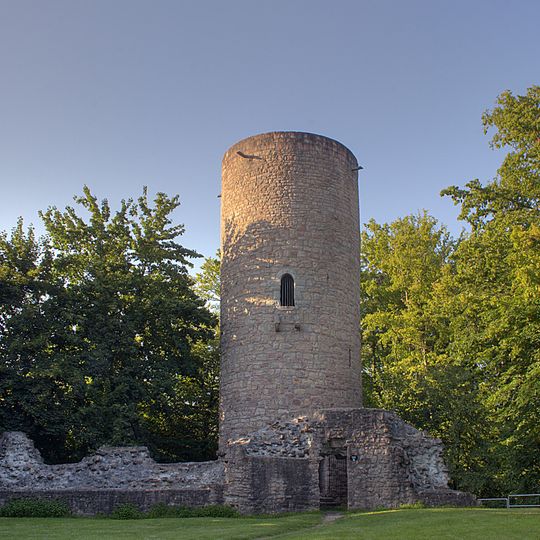
Stolzenberg Castle is a ruin on a hilltop near Bad Soden-Salmünster with preserved stone walls and a distinctive tower about 20 meters tall. The location offers views across the valley and surrounding forested landscape.
The founding date of Stolzenberg Castle cannot be determined from written records; a first fortification may have been built in the 11th or 12th century above the Via Regia trade road. The castle was first mentioned by name in 1252, when King William of Holland allowed Abbot Heinrich IV von Erthal of Fulda to rebuild it after it had been destroyed by "enemies of the church". In 1522, troops of Philipp von Hessen stormed the castle during the Knights' War, and by 1734 it was described as a decayed castle.
The name Stolzenberg survives in the noble Hutten family's suffix "zu Stolzenberg", used from the 15th century. Protestant services were still held in the castle chapel in 1597, angering the Catholic priest Martin Göbel, who reported it. The chapel, consecrated in 1319, served the residents of Stolzenthal, the settlement below granted town rights in 1296.
The ruin is freely accessible at all times. The observation platform on the roughly 20-metre bergfried is reached by an ground-level entrance and 88 steps; the original high entrance at about 10 metres height is still visible. The double moat and rampart line marks the former ring wall around the whole plateau.
The castle's name first appears in a 1252 charter of King William of Holland, who let the Fulda abbot Heinrich IV von Erthal rebuild it after "enemies of the church" had destroyed it. The counts of Rieneck and Archbishop Gerhard of Mainz are both candidates for the attackers.
The community of curious travelers
AroundUs brings together thousands of curated places, local tips, and hidden gems, enriched daily by 93,666 contributors worldwide.