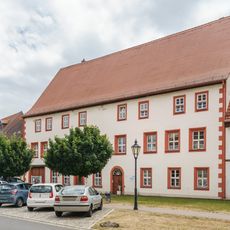
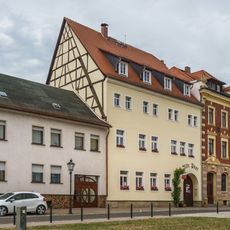
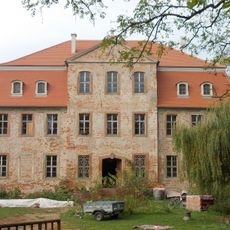
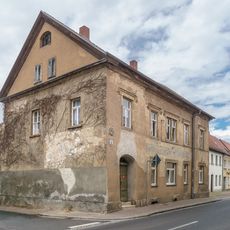
Burg Groitzsch, Medieval castle ruins in Groitzsch, Germany.
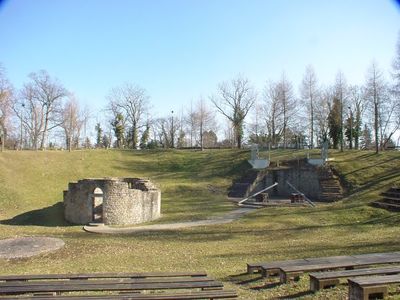
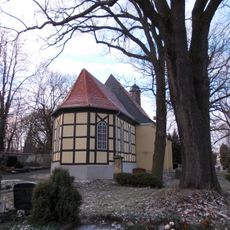
Burg Groitzsch, also called Wiprechtsburg, is a ruined hillfort on a spur above the Weiße Elster valley, about 30 km southwest of Leipzig. Its main castle covers 150 by 100 m and rises 10–12 m above the road that cuts through the former dry moat. A partially reconstructed round chapel and the stump of a round tower, both from around 1080, are the oldest known stone buildings in Saxony.
The castle came under the control of Count Wiprecht von Groitzsch through a land exchange in 1073, marking its first documented record. The fortification underwent several reconstructions and expansions across the centuries.
The name Groitzsch comes from the Slavic word grodišče, meaning a fortified place or rampart. The site gave its name to the Groitzscher Gruppe, the Middle and Late Slavic pottery of the 10th and 11th centuries. In summer the amphitheatre-shaped grounds host open-air concerts and performances, and a vineyard of over 5,000 vines has been planted.
The ruin is open at all times and free of charge. A road from Pegau to Groitzsch runs through the grounds along the line of the medieval dry moat, dividing the main castle from the outer bailey. The main castle lies 10 to 12 m above this road and is reached on foot; only the east side has a preserved 4 m rampart.
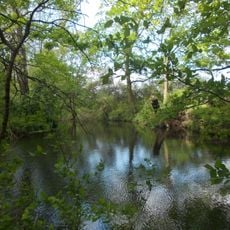
In 1863 a "treasure-lifting committee" pumped the Schwennigke dry hoping to find Wiprecht's hoard; apart from a rich catch of fish, they recovered only a modern horseshoe, a sword blade and a rapier guard. The castle's name comes from Slavic grodišče, meaning fortified place.
The community of curious travelers
AroundUs brings together thousands of curated places, local tips, and hidden gems, enriched daily by 92,847 contributors worldwide.