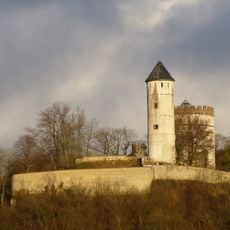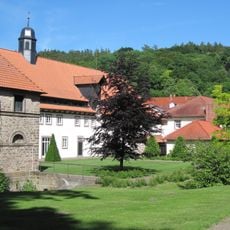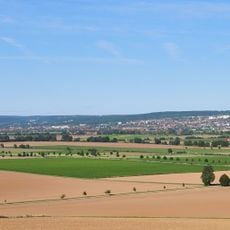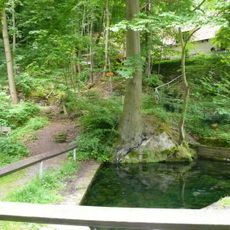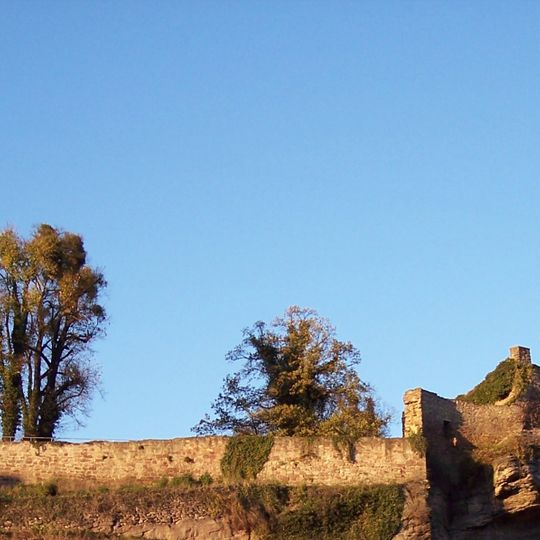
Burg Hardenberg, Medieval castle ruin on a rocky outcrop in Nörten-Hardenberg, Germany.
Burg Hardenberg is a castle ruin set on a rocky spur above the town of Nörten-Hardenberg in Lower Saxony, Germany. It is made up of two main sections, the front house near the hilltop and the back house lower on the slope, both open to the sky but still showing their original layout.
The Archdiocese of Mainz founded the castle to watch over two trade routes, and it was first documented as a fortified house around 1101. In 1098 Archbishop Ruthard of Mainz had already taken refuge there from King Henry IV. In 1287 the castle was besieged by the dukes of Brunswick and then pledged to the lords of Hardenberg, who took their name from it. A 1409 division of the family estate created the Vorderhaus and Hinterhaus branches, and the double castle remained in Hardenberg hands.
The Hardenberg family, originally called de Novalis, took its name from the castle and passed it to the settlement below. A local legend links their boar's-head crest to a night attack: a boar's grunting is said to have woken the garrison. The family still owns the ruin and runs a grain distillery in the village, founded in 1700.
The path up to the ruin is steep and the ground is uneven, so sturdy shoes are a good idea before heading up. It is worth taking time to walk between both sections of the complex, as the lower part is easy to miss.
In March 1698 a great thunderstorm caused the Vorderhaus to give way and collapse; the source does not say the whole castle fell. That line moved to Göttingen and around 1710 into the newly built Schloss Hardenberg at the foot of the hill, while the Hinterhaus line left the castle in 1720.
The community of curious travelers
AroundUs brings together thousands of curated places, local tips, and hidden gems, enriched daily by 93,629 contributors worldwide.