Burg Harste, Medieval castle ruins in Bovenden, Germany.
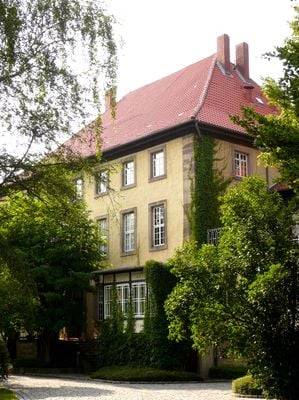
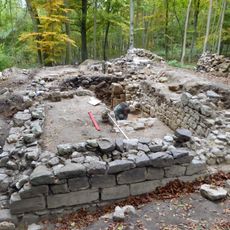
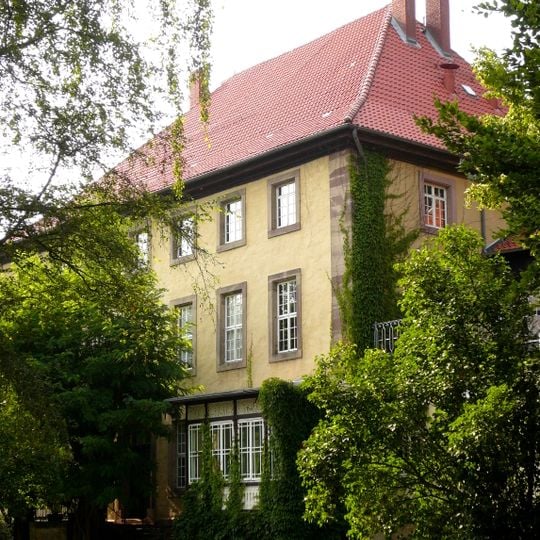
Burg Harste is a vanished medieval castle site in Bovenden, Lower Saxony. Its location is probably beneath the east wing of the later estate, and no traces of the castle itself remain. The present Amtshaus, built in 1727, is a plain three-storey stone building with a hipped roof; the moat that once surrounded it was probably filled in at that time.
Burg Harste was probably built after the mid-13th century, when the Welfs expanded their position against the Bishopric of Hildesheim. It is first documented in 1294, when Duke Albrecht II reconciled with Göttingen over its destruction. Destroyed again in 1294 and rebuilt by 1308, it served as a secondary residence of the Principality of Göttingen; Duke Ernst died here in 1367. Between 1568 and 1575 the main building was replaced by an office building, which burned in 1727 and was replaced by the present one.
The moat around the former castle was filled in, probably when the present Amtshaus was built after the 1727 fire, so no water ring survives. The name Harste refers to the village in Bovenden, not to the castle itself. The building has served as a state domain until 1968 and is now privately owned.
The 1727 Amtshaus stands on the site of the former eastern wing of the castle in western Harste; the moat was filled in when it was built, so no water features remain. The building is now privately owned and used by a company, so it can only be viewed from outside. Look for the three-storey stone block with its hipped roof.
The site stood at a toll station where old trade routes from Hildesheim and Göttingen crossed. This location made it a control point for medieval commerce in the region.
The community of curious travelers
AroundUs brings together thousands of curated places, local tips, and hidden gems, enriched daily by 92,918 contributors worldwide.