Burg Heeßel, Medieval fortress ruins in Burgdorf, Germany
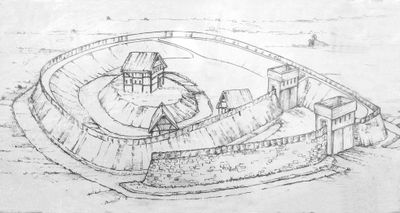
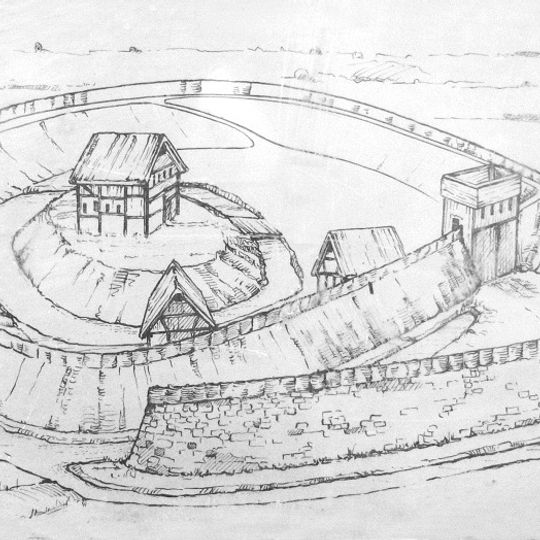
Burg Heeßel is a levelled early medieval fortification near Heeßel, a district of Burgdorf, consisting of a 2.5 m high castle mound measuring 17 × 25 m, surrounded by a 7 m wide ditch and earthen ramparts still 3–5 m high. A spiral rampart encircles the main mound, and a triangular outer bailey extends eastward with a surviving 180 m long, 5 m wide rampart. The site lies in the Heeßeler Tannen forest.
The site was in use from the 8th to the 13th century, with most finds dating to the 10th and 11th centuries. In 1934 the Niedersächsisches Landesmuseum Hannover led excavations with students, cutting about 25 trenches and opening 10 larger areas. These revealed two building foundations, 10 × 6 m and 6 × 9 m, with stamped clay floors and a masonry hearth, plus a 1.5 m deep wooden-lined well in the outer ward. Pottery, an iron spur, part of a leather shoe and a hand mill date the occupation.
The site is a protected cultural heritage monument; its discovery followed a 1930s episode when a landowner removed a 90-metre stretch of rampart for farming, prompting a teacher to recognise the earthworks. The 1934 excavation, led by the Niedersächsisches Landesmuseum Hannover with students, opened about 25 trenches and 10 larger areas. Finds included an iron spur, part of a leather shoe and a hand mill for grinding grain.
The site is located about 20 kilometers northeast of Hannover and can be reached by forest paths in the area. Visitors should wear sturdy shoes as access involves walking through woodland with uneven terrain.
The fortress was deliberately built on an elevated sandy island surrounded by marshland, creating an optimal defensive position. This strategic placement made it difficult for attackers to approach, and the landscape still reflects this intentional design today.
The community of curious travelers
AroundUs brings together thousands of curated places, local tips, and hidden gems, enriched daily by 93,830 contributors worldwide.