Lichtenstein Castle, Medieval castle in Pfarrweisach, Germany.
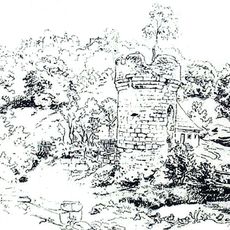
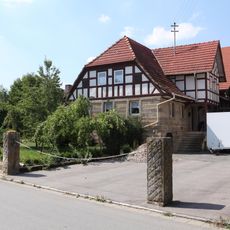
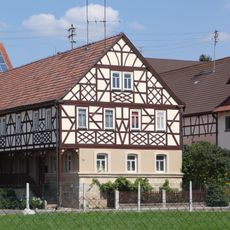
Lichtenstein Castle is a hill castle on a ridge of the Haßberge about 100 metres above the Weisach valley, roughly six kilometres north of Ebern. Of the original four joint-fief seats, the South Castle survives and is still lived in, the North Castle is a ruin open to visitors, a Baroque Protestant church stands on the site of the vanished third seat, and ruins of a fourth lie at the southwestern corner of the perimeter wall.
The fortress was built in the first half of the 13th century on a site where earlier fortifications had existed. It served as a seat for a regional noble family and played a role in local medieval power struggles.
The name Lichtenstein comes from the Stein von Lichtenstein branch of the lords vom Stein, first documented with the castle in 1232. Since the Baroque era the village church "Zum Ewigen Licht" has stood on the site of the vanished third joint-fief residence, so church and castle ruins share one walled complex.
The South Castle is now privately owned and can only be viewed from the outside; its inner courtyard with the original defensive walkway is accessible only on a guided group tour. The North Castle ruin is open at weekends or by prior arrangement. The Protestant church stands on the site of the vanished third castle.
The inner courtyard's original defensive walkway is said to have served castle researcher Bodo Ebhardt as a model for restoring Haut-Kœnigsbourg in Alsace. The walkway is only accessible on a guided group tour; the South Castle itself can otherwise be viewed only from outside.
The community of curious travelers
AroundUs brings together thousands of curated places, local tips, and hidden gems, enriched daily by 92,654 contributors worldwide.