Burg Lützelbach, Medieval castle ruins in Lützel-Wiebelsbach, Germany
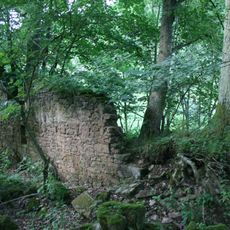
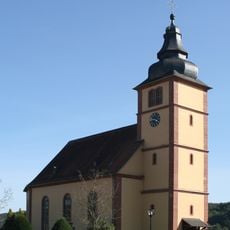
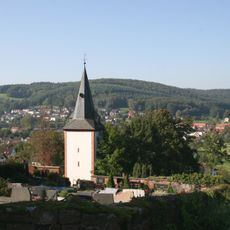
Burg Lützelbach was a medieval spur castle on a 290-metre ridge west of Lützel-Wiebelsbach. Its site is now occupied by the village's Protestant church and cemetery. In 2001, utility trenching on the cemetery exposed a 4.20-metre-thick sandstone foundation wall, preserved 1.30 to 1.40 metres high and interpreted as the castle's bergfried.
The Reiz von Breuberg family named itself after Lützelbach in the 12th century, when written sources first mention it as "Reiz de Luzelenbach"; their seat is sought on the church hill. By 1229 Conrad I called himself "Reiz von Breuberg" after the new hilltop castle built as a fief of Fulda Abbey. When the Breuberg line died out in 1323, the Lützelbach castle had long lost its importance to Breuberg.
The name Lützelbach survives in the family title "Reiz de Luzelenbach", used by the lords of Breuberg when they first appear in 12th-century records. By 1229 Conrad I called himself "Reiz von Breuberg" after the new castle, and the Lützelbach seat faded once the Breuberg line died out in 1323.
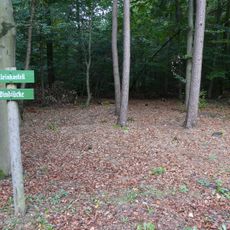
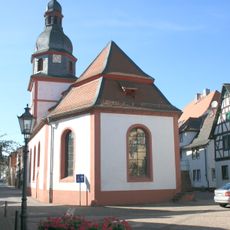
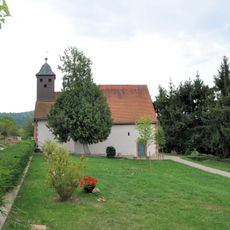
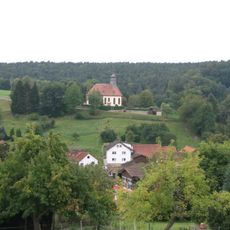
The former castle site lies on the elevated ground west of Lützel-Wiebelsbach, now occupied by the Protestant church and its cemetery. Nothing of the castle is visible above ground; only a small note on the cemetery notice board refers to it. The 2001 excavation trench that revealed the 4.2-metre-thick sandstone foundation was filled in again, and further investigation was not possible within the working cemetery.
The castle's masonry was not lost after its abandonment: stones from the former buildings are thought to be built into the cemetery wall and into the church erected in 1770–74 on the site of an earlier structure. A small note on the cemetery board is the only marker of the vanished castle.
The community of curious travelers
AroundUs brings together thousands of curated places, local tips, and hidden gems, enriched daily by 92,643 contributors worldwide.