Burgruine Schöneberg, Medieval castle ruin in Schöneberg, Germany.
Burgruine Schöneberg is a medieval castle ruin in Schöneberg with stone walls that still stand today. The remains show different areas of the former fortress and allow visitors to see how the defensive structure was laid out.
Count Hermann II of Winzenburg built the castle around 1122 to protect his estates. After his murder in January 1152 it passed to the Archbishops of Mainz, who enfeoffed the Lords of Eberschütz (from 1170 von Schonenberg) with it. In 1429 Landgrave Ludwig I of Hesse bought it outright. It was demolished in 1582/83, and Landgrave Wilhelm IV used its stones to build the walls of the Tiergarten at Sababurg.
The name Schöneberg comes from the noble family von Eberschütz, called von Schonenberg from 1170, who held the castle as a fief of the archbishops of Mainz. In 1303 the lords of Schonenberg promised the castle would always be open to the archbishop, like nearby Trendelburg. The castle was demolished in 1582/83 and its stones used for the Tiergarten walls at Sababurg.
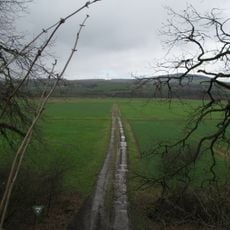
The ruin stands on the 323.2 m basalt cone of the Schöneberg and can only be reached on forest paths; there is no direct road access. The Esse river runs west below the hill, roughly 190 m lower near Schießbach. Sturdy footwear helps on the uneven woodland trails.
The castle was demolished in 1582/83, and Landgrave Wilhelm IV of Hesse had its stones used to build the walls of the Tiergarten at Sababurg. Of the once extensive complex, little remains today apart from a castle well restored in modern times.
The community of curious travelers
AroundUs brings together thousands of curated places, local tips, and hidden gems, enriched daily by 94,217 contributors worldwide.