Burg Tautenburg, Medieval castle ruin in Tautenburg, Germany.
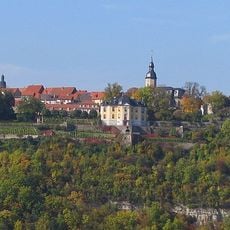
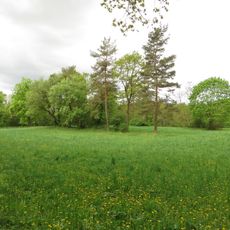
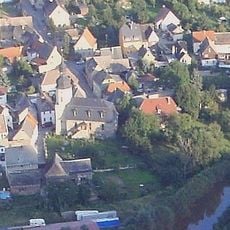
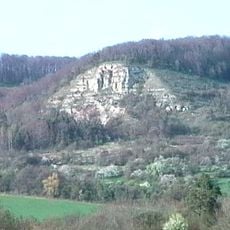
Burg Tautenburg is a castle ruin on a hilltop in Tautenburg, Thuringia, with stone remnants showing the layout of a medieval fortified structure. The remains are still partly visible and offer views across the surrounding landscape from above.
The castle is first documented in 1223, when Tuto von Tautenburg and his son of the same name appear in a charter; the name Tuto probably gave the castle its name. By 1227 it was held by the Lords of Lobdeburg-Saalburg, and before 1232 it passed as a Lobdeburg fief to the Schenken von Vargula, who were enfeoffed with it by Emperor Frederick II in 1243. From 1343 the Tautenburg lords held it from the Counts of Schwarzburg, from 1345 from the Wettins; the local Schenk line died out in 1640 and the castle served as an electoral Amt seat until 1776.
The ruins serve as a local landmark that people recognize as part of their village identity and use as a destination during walks through the area. It represents a tangible link to the region's distant past for residents.
The ruins are free to visit year-round without entrance fees, but sturdy footwear is needed because of the uneven ground and steep slope. Allow time for the climb and keep in mind that weather conditions can affect the condition of the paths.
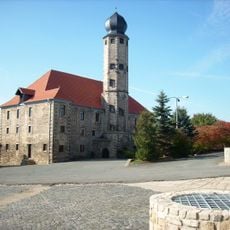
The five-sided gate tower in the southeast corner of the older western section is often wrongly called a bergfried. Its dating is uncertain; a wall section in opus spicatum without lime mortar and a small quatrefoil window point to the 13th century, possibly linked to Schenk Rudolf II von Vargula's rebuilding in the 1230s and 1240s.
The community of curious travelers
AroundUs brings together thousands of curated places, local tips, and hidden gems, enriched daily by 93,398 contributors worldwide.