Burgstall Hohenegg, Medieval castle ruins in Grünenbach, Germany.
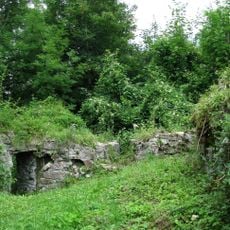
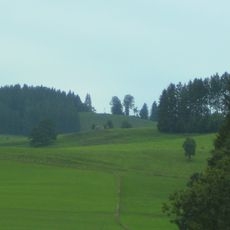
Burgstall Hohenegg is an archaeological site containing the remains of a medieval castle on elevated terrain in Bavaria's Allgäu region. Today, the foundation walls and underlying ground structures of the former fortification are still visible on the natural hilltop.
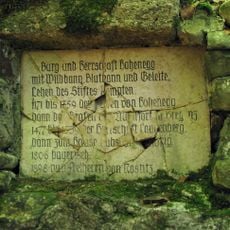
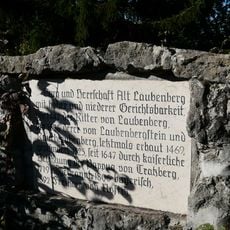
The castle was first mentioned in 1171 and was held by the Lords of Rettenberg, later called Trauchburg. From about 1240 it became the ancestral seat of the Lords of Hohenegg, a side line of the Trauchberg family. In 1359 the Hoheneggs sold the lordship of Hohenegg with their ancestral castle to Count Wilhelm III of Montfort-Bregenz.
The castle complex displays medieval building styles and represents the defensive structures that shaped the Allgäu region during its feudal period. Such fortifications served as centers of power for local noble families.
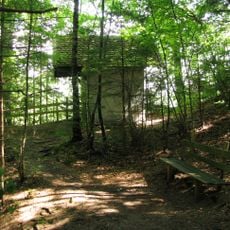
The ruins are accessible throughout the year via marked hiking trails and allow visitors to view the remaining foundation structures up close. The site is open to the public, though visitors should be prepared for uneven ground and grass-covered walls.
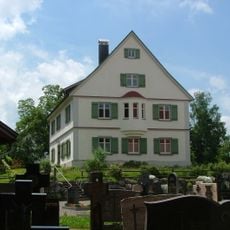
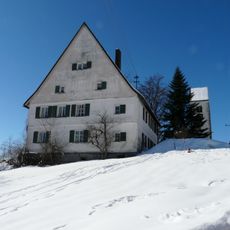
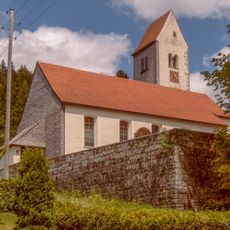
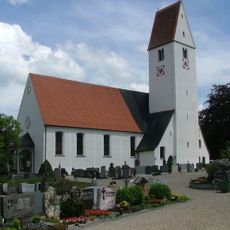
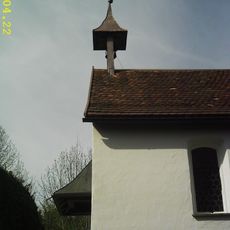
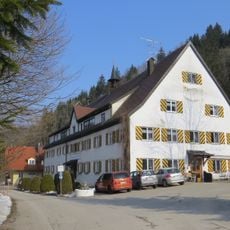
The castle was last mentioned in 1559 and left to decay during the Thirty Years' War. In 1730 its remaining walls were demolished and the stones used to build an ironworks in Schüttentobel. Since 1898 the ruin has belonged to the Freiherren von Nostitz, and a chapel built in 1897 stands in its northeast corner.
The community of curious travelers
AroundUs brings together thousands of curated places, local tips, and hidden gems, enriched daily by 94,419 contributors worldwide.