Burgstall Haselstein, Archaeological castle site in Floß, Germany
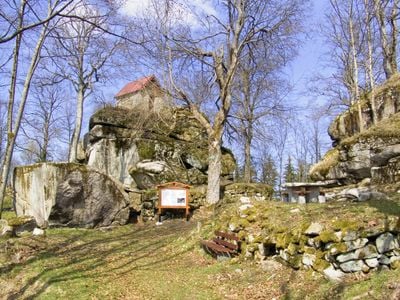
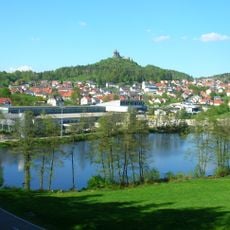
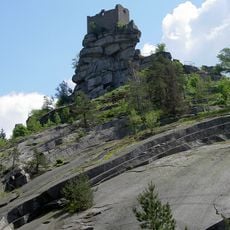
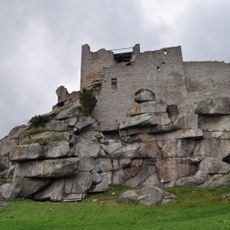
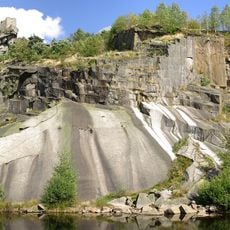
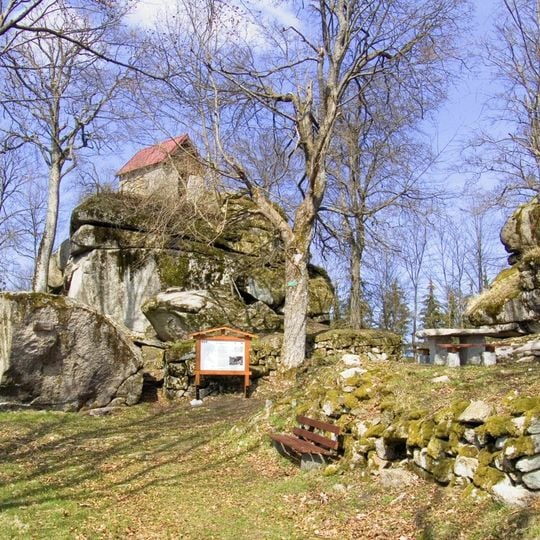
Burgstall Haselstein is a castle ruin standing at 705 meters altitude in state forest, surrounded by steep granite rock formations. The remains show medieval stonework and structural elements preserved within a wild, forested setting near Floß.
The castle was built around 1400 as a fortification in the Upper Palatinate region and abandoned in the 16th century. Its rediscovery in 1860 led to use as an event venue, which prevented complete decay of the site.
The name comes from the hazel shrubs that once grew on the rocky slopes surrounding the castle. Today the granite rock formations and ruins create a distinctive landmark that draws visitors interested in medieval sites.
The site is accessible via multiple hiking trails of varying difficulty, with the shortest route starting from the Small Gaisweiher parking area. The paths are best tackled in dry conditions since the rocks can be slippery and the ascent becomes steep near the top.
A distinctive granite rock formation is known as the Petrified Watchdog, a natural shape that resembles a sleeping dog. A small shelter hut sits at the summit of this rock, offering rest and views across the surrounding landscape.
The community of curious travelers
AroundUs brings together thousands of curated places, local tips, and hidden gems, enriched daily by 92,306 contributors worldwide.