Burgstall Parsberg, castle
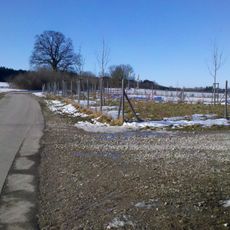
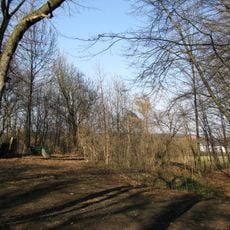
Burgstall Parsberg is a three-part hilltop castle site above the Germeringer See in the Puchheim district. At its centre stands the western half of a tower mound about six to seven metres high, its eastern half dug away for material. A small, nearly square outwork rises about five metres above the ditch floor to the west, and a wide outer bailey runs down the slope to the east. Ditches two to three metres deep with rim walls enclose an area of roughly 150 by 50–60 metres.
No written records of the castle's history survive. Pottery fragments show the site was used at least until the 14th century, and brick rubble from the tower mound and eastern bailey dates to the 12th–13th centuries. The western part's layout points to the early High Middle Ages. Arrow and crossbow bolt heads found here may relate to the 1422 Battle of Alling nearby.
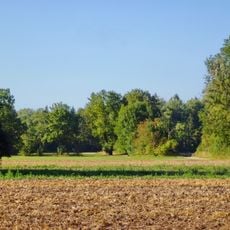
The name Parsberg reflects its role as a medieval stronghold in the regional landscape. Visitors can observe how the site sits within the natural terrain and understand the importance such fortifications held for medieval communities.
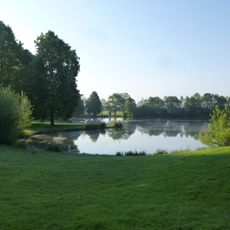
The site lies on a hilltop in the Puchheim cadastral district above the Germeringer See, which was created after 1970 in former moorland. The earthworks cover roughly 150 by 50 to 60 metres; the central tower mound keeps its western half at six to seven metres, while its eastern part was dug away for material. The ditches are two to three metres deep, and the southern section of the eastern bailey appears unfinished.
The site was long mistaken for a Celtic quadrilateral enclosure, and its three-part layout is unusual: a central tower mound, a small western outwork, and a large eastern bailey whose southern ditch appears unfinished. The whole complex spans roughly 150 by 50–60 metres.
The community of curious travelers
AroundUs brings together thousands of curated places, local tips, and hidden gems, enriched daily by 92,862 contributors worldwide.