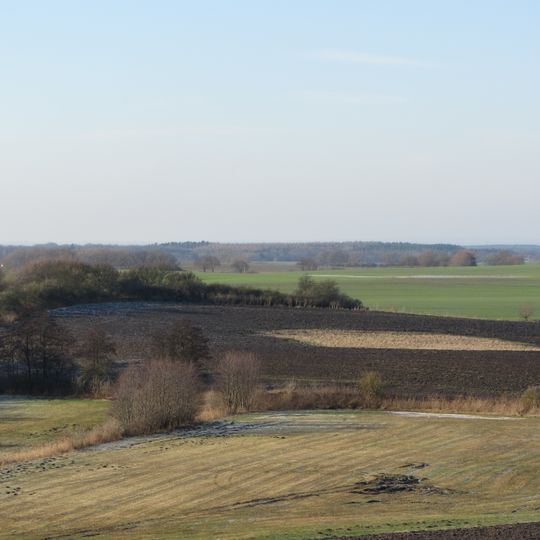
Burg Ilow, Medieval fortification in Neuburg, Germany
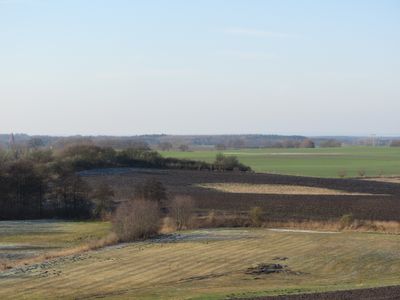
Burg Ilow was a castle complex on Wallberg hill, with visible fortification remains still evident today, particularly in the southwestern section. The site spans several hectares and shows traces of the former defenses along with archaeological findings discovered in the northeastern area.
The site first served as an Obotrite fortress until it was burned down in 1164 by Heinrich the Lion, who then had it rebuilt as a frontier stronghold. This reconstruction marked a shift in control and strategic use of the location.
The name Ilow comes from the Slavic word 'Ilu', meaning clay or mud, and reflects the local clay extraction work that took place here long ago. This naming shows how deeply farming and craft activities shaped life in the area.
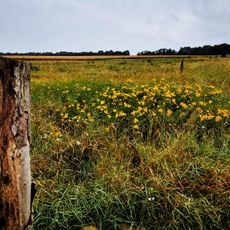
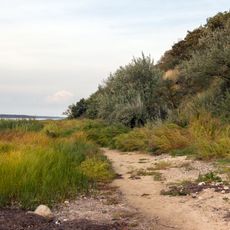
The site is now used as farmland with a signpost marking the former castle location. Wear sturdy shoes since the terrain is uneven and can be muddy depending on the season.
A second fortress with the same name stands roughly 1 kilometer east in the forest, forming an unusual pair of defensive works with this one. This double layout is quite rare in the region and raises questions about how the two were used together.
The community of curious travelers
AroundUs brings together thousands of curated places, local tips, and hidden gems, enriched daily by 91,364 contributors worldwide.