Burg Kalsmunt, Castle ruin in Wetzlar, Germany
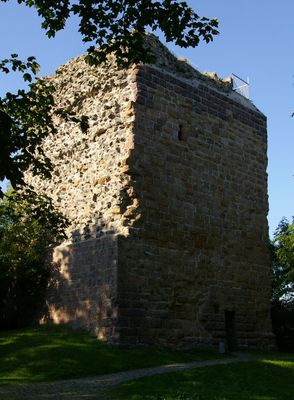
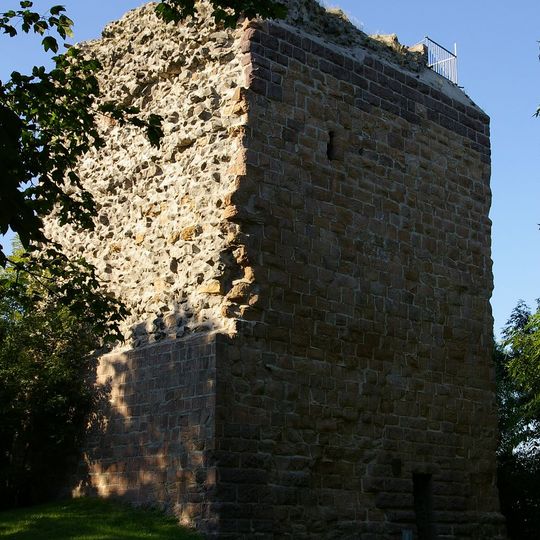
Burg Kalsmunt is a ruined hilltop castle on a 256 m basalt cone about 850 m southwest of Wetzlar's old town, 90 m above the Schillerplatz. Its main surviving structure is a square keep with walls three metres thick; the keep's entrance was broken through at ground level in 1836, and its top now serves as a viewing platform.
The fortress was built around 1180 by the Holy Roman Emperor Frederick Barbarossa to protect royal holdings. It functioned as an imperial strongpoint to secure important trade routes of that era.
The fortress served as a toll administration center and held importance in overseeing medieval trade moving through the region. It represented how local authority managed commerce and movement of goods along key routes.
The ruin sits on a basalt cone about 850 m southwest of Wetzlar's old town, roughly 90 m above the Schillerplatz. The keep's three-metre-thick wall was pierced at ground level in 1836, so the interior is entered directly rather than by the former first-floor stair building. The viewing platform on the tower rests on concrete and masonry added for a 2-cm anti-aircraft gun in the Second World War.
In 1284 the impostor Tile Kolup, posing as Emperor Frederick II, was held and interrogated at Kalsmunt before being burned at the stake in Wetzlar on 7 July 1285. The castle was never attacked. In 1836 the Wetzlar historical society broke a ground-level entrance through the keep's three-metre-thick wall; access had previously been via a first-floor stair building.
The community of curious travelers
AroundUs brings together thousands of curated places, local tips, and hidden gems, enriched daily by 94,514 contributors worldwide.