Burg Hohenlandsberg, Medieval castle ruin in Weigenheim, Germany.
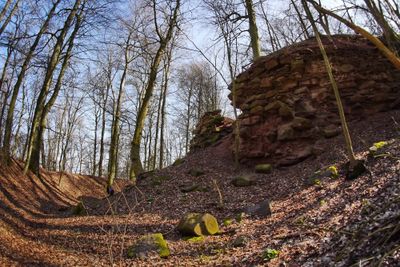
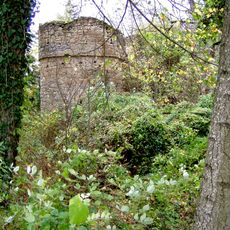
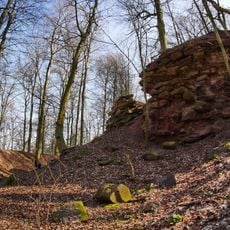
Burg Hohenlandsberg is a castle ruin situated on a roughly 500-meter hill near Weigenheim in Upper Franconia. The remaining walls, cellars, and fortification embankments demonstrate the medieval construction methods and defensive design of the stronghold.
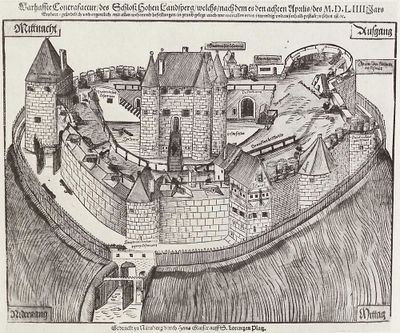
Construction began in the 13th century under the Lords of Hohenlohe as a regional defensive stronghold. The fortress fell during the Second Margrave War in 1554 and was never rebuilt thereafter.
The castle gave its name to the Schwarzenberg lordship of Hohenlandsberg, which held high jurisdiction (Zent) over Seinsheim and ruled the villages of Weigenheim, Seinsheim, Iffigheim, Herrnsheim and Dornheim. Because troops of Margrave Albrecht Alcibiades of Brandenburg-Kulmbach were stationed here unlawfully and raided the countryside, the site long bore the reputation of a robber-baron castle.
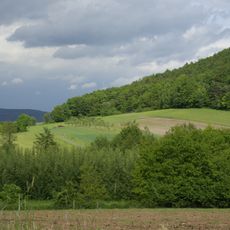
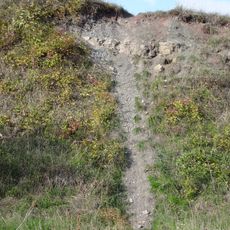
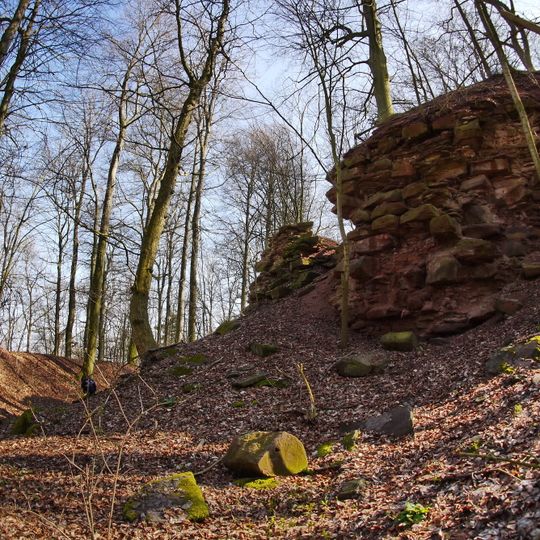
The ruin lies on the 498-metre Hohenlandsberg in the southern Steigerwald, near Weigenheim in the Neustadt an der Aisch-Bad Windsheim district. The site is a Bodendenkmal, so the walls, casemates, cellars and ramparts should be viewed from the paths rather than entered. The leaf-covered slope below the masonry is uneven ground.
The castle's reputation as a robber-baron stronghold comes from the Second Margrave War of 1553–55, when mercenaries of Margrave Albrecht Alcibiades of Brandenburg-Kulmbach were stationed at Hohenlandsberg without legal right and terrorised the surrounding countryside. The casemates still visible today were built around 1511, when Johann von Seinsheim-Schwarzenberg had the castle rebuilt and strengthened with then-modern fortification techniques.
The community of curious travelers
AroundUs brings together thousands of curated places, local tips, and hidden gems, enriched daily by 94,598 contributors worldwide.