Tecklenburg, Medieval castle ruins in Tecklenburg, Germany.
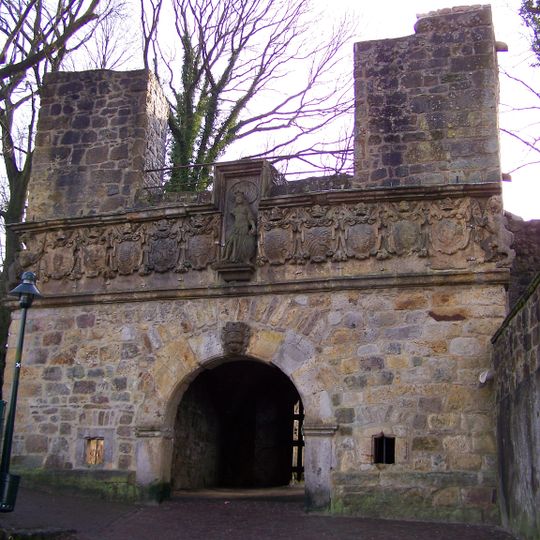
Tecklenburg is a ruined hilltop castle on the Burgberg in the Teutoburg Forest, about 170 metres above sea level. Its surviving structures include the Mauritztor, a 17th-century gate whose ground floor and part of the first floor remain, with a richly carved coat-of-arms frieze. The site also preserves a northeast bastion, rediscovered in 1944.
The castle was founded around 1100 by the Dutch Count of Zutphen to control trade routes through the region. A papal ban issued in 1226 following a high-profile murder shows its growing political importance over time.
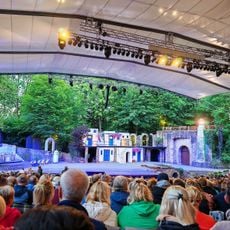
The castle ruin serves as the venue for the Freilichtspiele Tecklenburg open-air theatre. The gate still standing is the Mauritztor, built in the 17th century under Count Mauritz; its ground floor and parts of the first floor survive with a richly carved coat of arms frieze.
The castle ruin stands on the Burgberg at about 170 metres above sea level on the edge of the Teutoburg Forest. The north-eastern entrance is reached by the Schlossstrasse, an embankment built under Countess Anna; the gate there, the Mauritztor, keeps its ground floor and part of the first floor with a carved coat of arms frieze. The site now serves as the venue of the Tecklenburg Open-Air Theatre.
In 1225 Frederick of Isenberg, the suspected murderer of Archbishop Engelbert of Cologne, hid at the castle; the papal legate Conrad of Urach responded in 1226 by placing both castle and town under ban. In 1227 the Cologne church seized the castle, judging the count to have forfeited it through his part in the conspiracy.
The community of curious travelers
AroundUs brings together thousands of curated places, local tips, and hidden gems, enriched daily by 93,935 contributors worldwide.