Burgruine, Medieval castle ruins in Thierstein, Germany
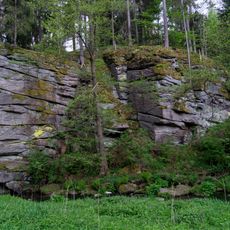
Burg Thierstein is the ruin of a spur castle on a basalt spur 615 m above sea level above the village of Thierstein. A neck ditch cuts the spur off to the southwest; the second ditch between the outer ward and the core castle was filled in during the 19th century. The round bergfried survives to 24 m, and the core castle's perimeter walls still rise in places to three storeys.
Albrecht XI Nothaft built Thierstein around 1340 as an administrative seat for the imperial forests of the Egerland; the castle is first recorded that year. Long feuds with the city of Eger forced the Nothafts to sell their holdings piece by piece, and by the end of the 14th century the castle passed to Margrave Wilhelm I of Meissen, reaching the Hohenzollern burgraves of Nuremberg in 1415. A fire that struck the market of Thierstein in 1725 left the castle in ruins.
The name Thierstein derives from the village below, and the castle served as the administrative seat of the imperial forest masters of the Egerland. In 1497 the bergfried became part of a system of watchtowers, and Thierstein was designated the assembly point for the citizen militias of the Sechsämterland. The oldest view of the castle is in Paul Reinel's Selb chronicle of 1612.
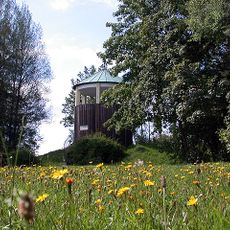
A key is required to visit the castle; it is handed out against a deposit. The 24-metre-high bergfried has a viewing platform with a panoramic view over the Fichtelgebirge and into the Egerland. The second neck ditch separating the outer ward from the core castle was filled in during the 19th century.
The 24-metre bergfried survives and its viewing platform looks across the whole Fichtelgebirge as far as the Egerland. The tower is not open freely: a key is handed out at Thierstein against a deposit. The second neck ditch, which once cut the long outer bailey off from the core castle, was filled in during the 19th century.
The community of curious travelers
AroundUs brings together thousands of curated places, local tips, and hidden gems, enriched daily by 94,638 contributors worldwide.